
Private jet price per hour peak season
The private jet price per hour peak season number is what a Part 135 operator quotes when its fleet is committed. A light jet that lists at $3,800 an hour can price near $5,800 in July. Here is where peak season bites and how to plan around it.
- Home
- Event dates

The private jet price per hour peak season figure is not a single number. It is what a Part 135 operator quotes when its fleet is already committed and the next tail has to be repositioned. Hourly ranges by class stay roughly fixed across the year: turboprops $2,200 to $3,500, light jets $3,800 to $5,800, midsize $5,200 to $7,800, super-midsize $7,200 to $10,000, heavy $9,500 to $14,500. What changes in peak windows is where inside that range a quote lands, and how much repositioning gets added.
Peak season is regional, not national. Florida fills in winter, the Mountain West and Aspen in ski season, the Hamptons and Nantucket in summer, and Las Vegas around large conventions and race weekends. Expect a private jet price per hour peak season spread of roughly 30 percent against shoulder months once deadhead legs are counted. If your dates are fixed, then booking early locks the tail rather than the rate; if they are flexible, then moving a day either side often recovers most of the gap.
Events that tighten peak season supply
Winter season in South Florida
- January through March
Miami-Opa Locka and Palm Beach absorb the densest charter traffic of the year, and Opa Locka sits at 8 ft elevation with four FBOs competing for ramp. Ask for a slot early. A light jet on the New York to Palm Beach route runs 902 nm and about 2h 30m, but winter repositioning can add hours to the billable quote.
Ski season in the Mountain West
- December through March
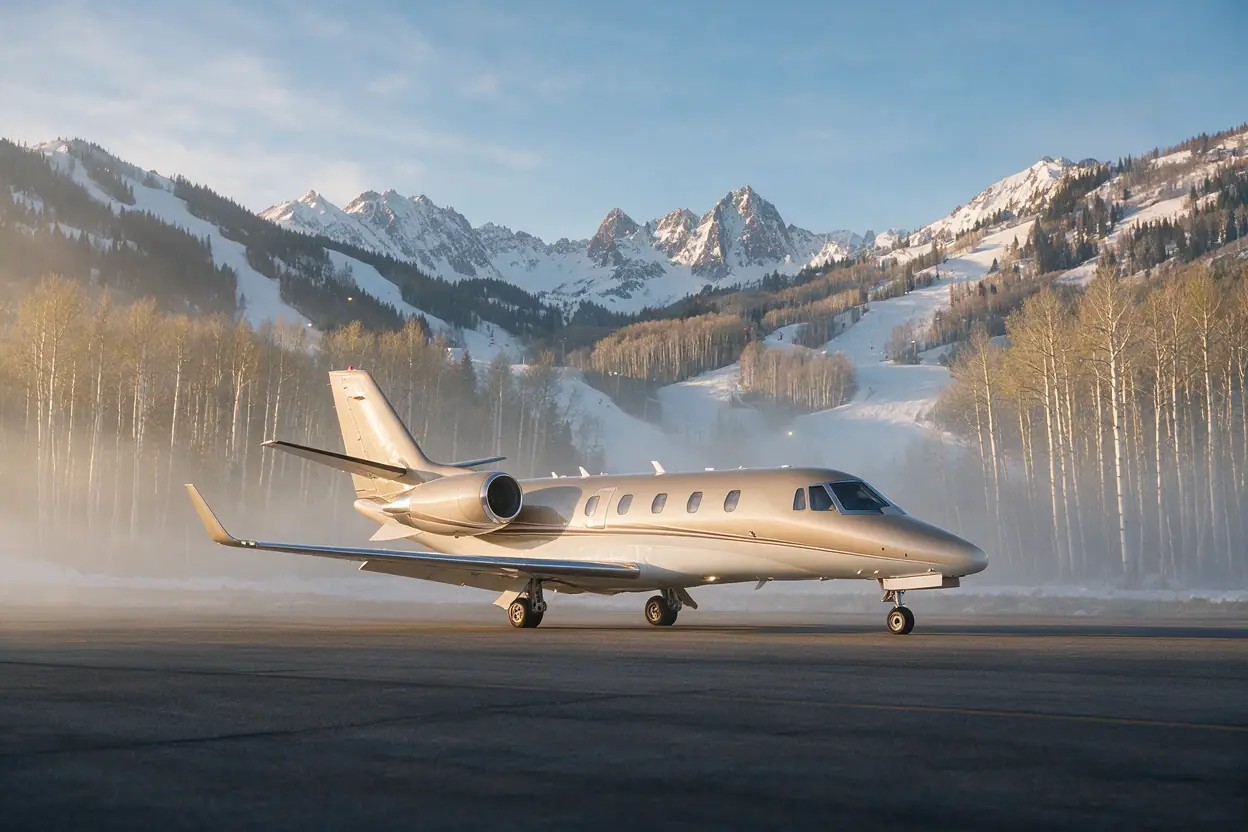
Centennial sits at 5,885 ft and its peak density altitude at 115F reaches 9,700 ft, so summer and winter both challenge performance. Holiday weeks around Aspen and Vail are the tightest. Heavy jets get scarce, and turboprops that handle shorter fields command premiums when snow closes alternate airports.
Summer in the Hamptons and Cape Cod
- June through August
Short hops from Teterboro to the Hamptons cover 82 nm in roughly half an hour of flight time, yet they price like a full day because the aircraft cannot be resold. Friday departures and Sunday returns are the pinch points. Expect the private jet price per hour peak season quote to reflect aircraft sitting on the ground.
Convention weeks in Las Vegas
- January, and again in spring and fall
Harry Reid International handles the volume, but Las Vegas at 2,181 ft elevation with a 115F density altitude of 6,300 ft limits some light jets on hot afternoons. Large conventions fill Atlantic and Signature ramp space, and arrivals from Los Angeles, a 199 nm hop, are the most affected.
Holiday travel windows
- Late November through early January
Thanksgiving, Christmas and New Year compress demand into a few days. Operators hold tails for confirmed trips and decline one-ways. If you are flying New York to Miami, 949 nm and about 2h 37m in a light jet, then the return leg is the expensive half unless you book both directions.
Spring break in Florida and the Caribbean
- March and April
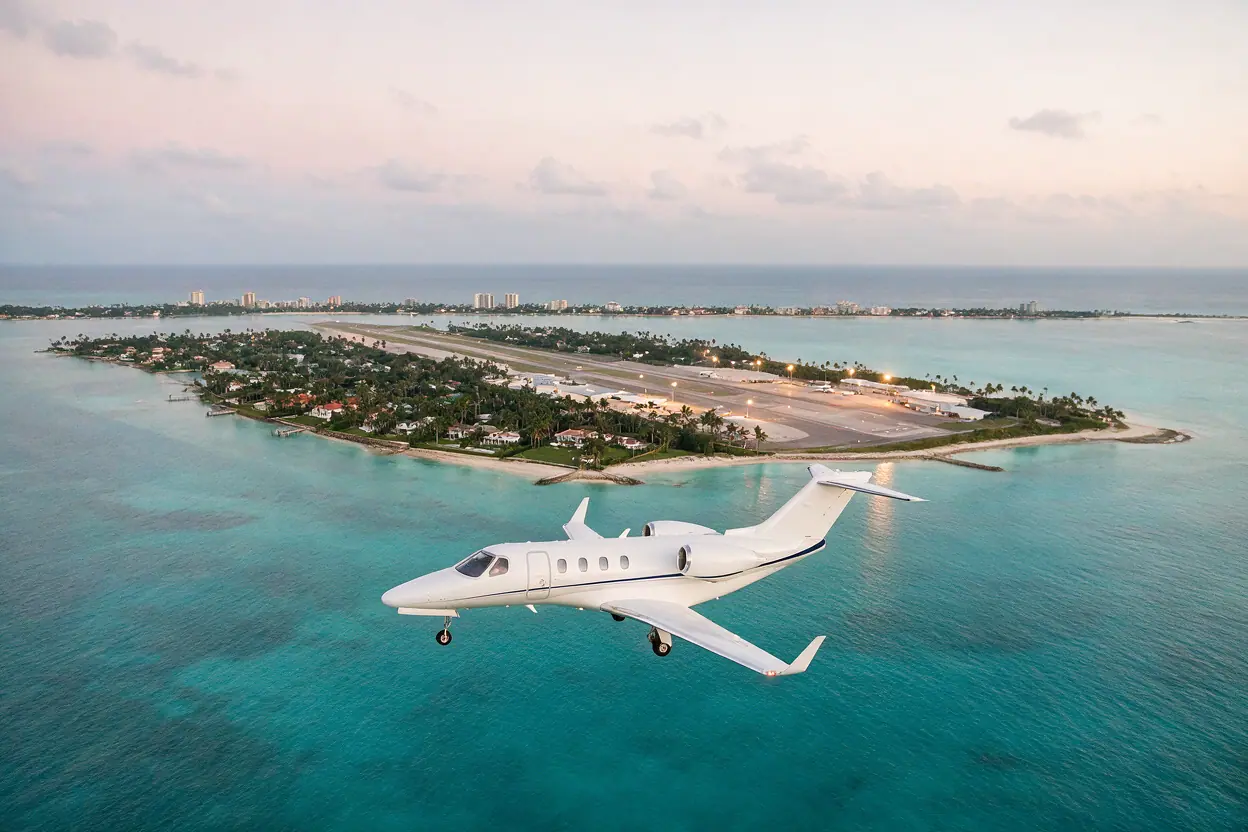
Miami to Nassau is 161 nm and about 42 minutes, but international legs need CBP clearance on arrival, and Nassau slots tighten in spring. Opa Locka and Fort Lauderdale fill first. If your trip crosses a border, then paperwork timing matters as much as aircraft availability.
Austin festival and conference season
- March and October
Austin Bergstrom has three FBOs and a 12,250 ft runway, which helps, but event weeks still strain ramp space. Dallas to Austin and Los Angeles to Austin both spike. Operators quote from farther away, and the repositioning shows up in the hourly figure.
Nashville and the Southeast summer
- May through August
Nashville International has four FBOs and absorbs steady charter traffic, but summer weekends around Nashville and Charlotte pull light and midsize jets from surrounding markets. Charlotte sits at 748 ft with a 115F density altitude of 3,600 ft, which is manageable for most classes.
Year-end in Los Angeles
- December, and awards season in January and February
Van Nuys is the busiest general aviation field in the region and sits at 802 ft with a 115F density altitude of 3,800 ft. Award season brings heavy jets and blocks ramp space. If you need a same-day departure from Los Angeles, then expect a repositioning charge or a larger aircraft than you wanted.
How to book around peak season pricing
The first thing to settle is aircraft class, because that sets the hourly band before any seasonal adjustment. A midsize jet runs $5,200 to $7,800 an hour and covers most domestic routes; a super-midsize at $7,200 to $10,000 buys cabin height and range for transcontinental legs. If your party is four and the leg is under two hours, then a light jet at $3,800 to $5,800 an hour is usually the efficient answer, peak or not.
The second is timing and direction. One-way pricing in peak windows often carries a repositioning cost, and round trips price better. Ask each operator for the tail number and the live hourly rate, not a brochure figure. We act as a DOT Part 295 broker, matching you to FAA Part 135 operators who hold operational control; the flight and its pricing are theirs. Quotes are estimates until the operator confirms the aircraft and crew.



Questions
What is the private jet price per hour peak season for a light jet?
Light jets list at $3,800 to $5,800 an hour, and peak season tends to push quotes toward the top of that band once repositioning is included. On a route like New York to Miami, 949 nm and about 2h 37m of flight time, a light jet typically prices $10,000 to $15,000 for the trip. Treat any quote as an estimate until the operator confirms the tail.
Does flying on a turboprop save money in peak season?
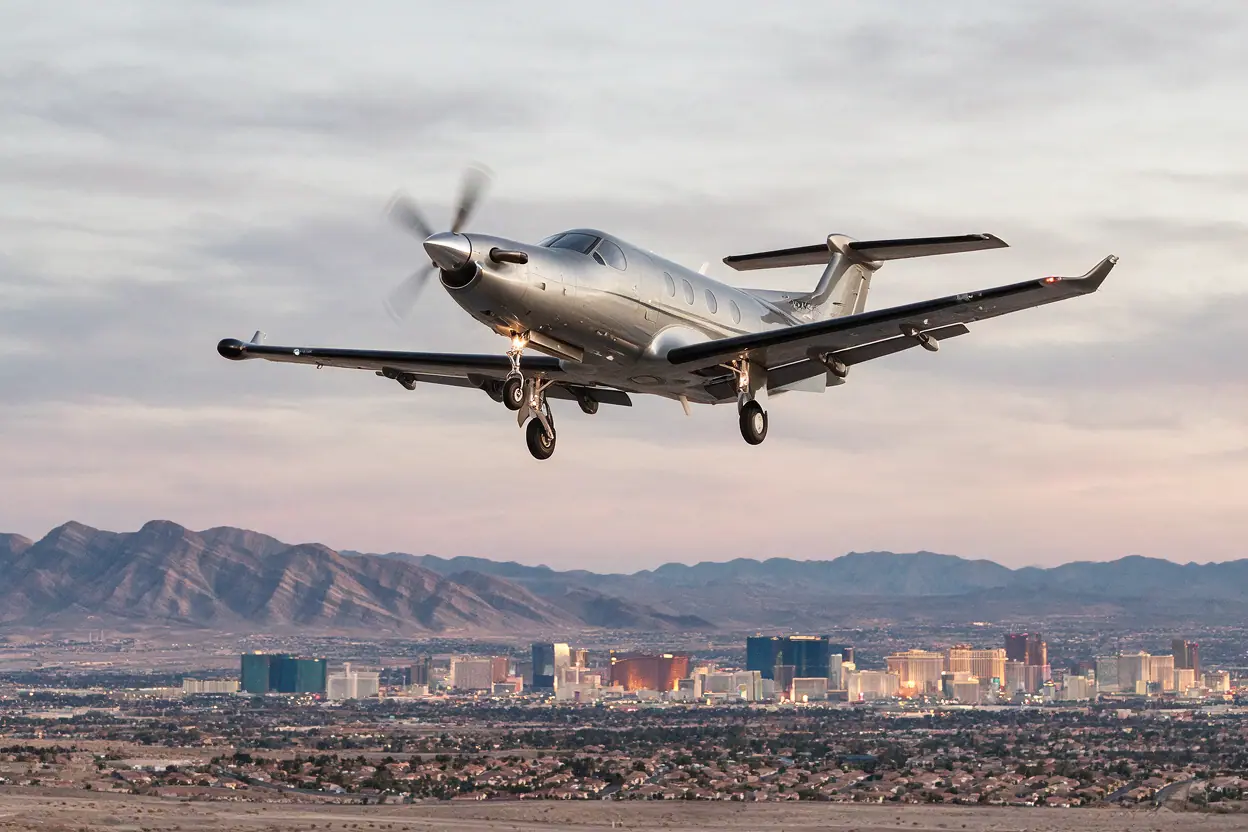
Yes. Turboprops run $2,200 to $3,500 an hour against $3,800 to $5,800 for light jets, and that gap holds in peak windows. A Beechcraft King Air 350i carries eight and cruises at 312 kts with 1,800 nm of range, enough for most regional legs. The trade is speed, so long routes still favor a jet.
Which airports get most expensive in peak season?
The tightest ramp space shows up at Teterboro, Van Nuys, Opa Locka and East Coast summer fields. Teterboro sits at 9 ft elevation with four FBOs and a 6,997 ft runway, and summer demand from New York pushes hourly quotes upward. Opa Locka and Palm Beach follow in winter. Booking two to three weeks out helps secure a slot.
How much does heat affect a summer charter quote?
Heat reduces performance, and operators plan around it. Las Vegas reaches a density altitude of 6,300 ft at 115F, and Centennial reaches 9,700 ft, which can limit fuel or payload on smaller jets. If your departure is a hot afternoon from a high field, then the operator may assign a larger aircraft, and the hourly price moves with it.
Can I avoid peak season pricing on a one-way flight?
Sometimes. Empty leg flights, where an aircraft repositions without passengers, price well below the standard hourly rate when they appear. They are one-way, fixed in time and rarely announced far ahead. If your schedule is flexible, then asking about empty legs on your route is worth the call, but do not plan a trip around finding one.
Who is responsible for the flight when I book through a broker?
The operator is. Charter brokers act as agents under DOT Part 295, while the flight itself is flown by an FAA Part 135 operator that holds operational control, insurance and crew responsibility. For international legs, CBP handles clearance at arrival. Ask for the operator name and tail number before you pay a deposit.