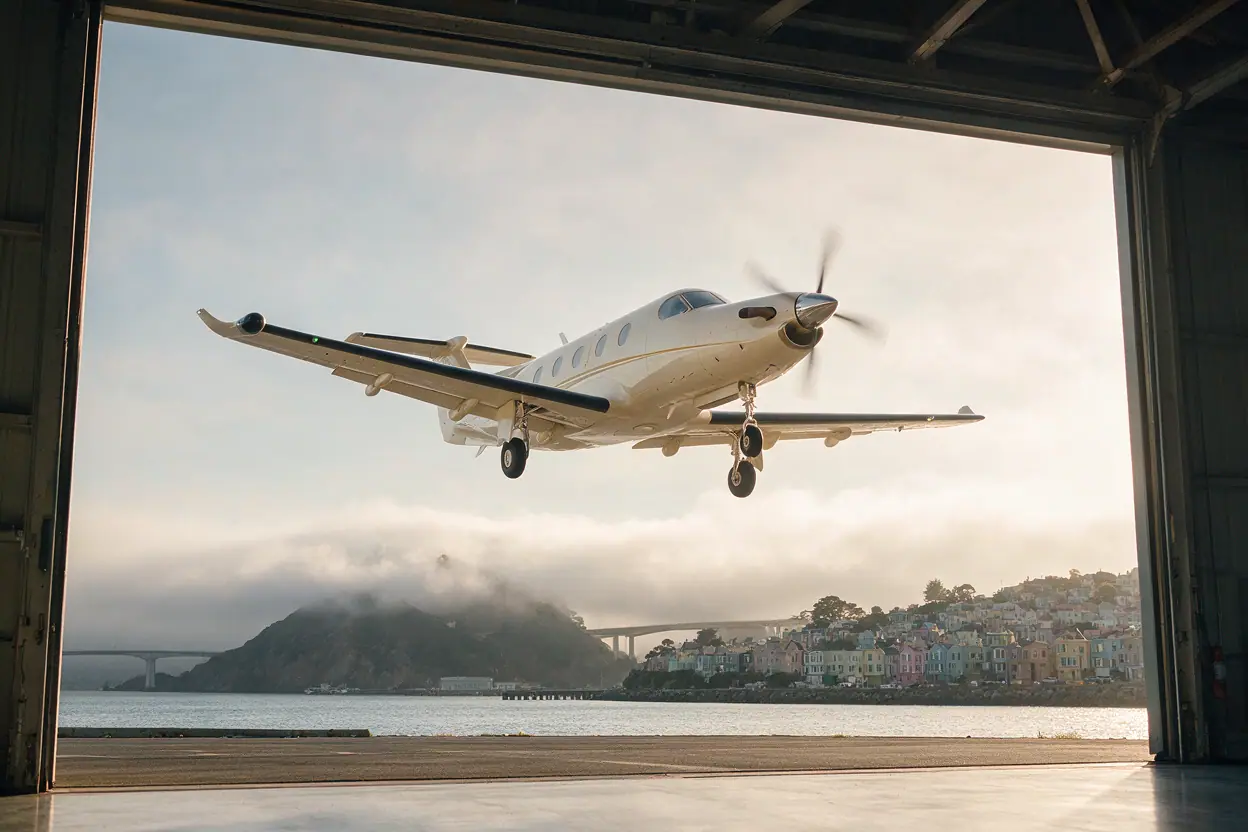
Private jet price per hour Los Angeles to San Francisco
Here is the private jet price per hour Los Angeles to San Francisco, with the cost drivers explained. The 279-nautical-mile hop runs $3,000 to $4,500 in a turboprop. All figures are estimates, not quotes, and they shift with aircraft and timing.
- 321 statute miles
- 279 nm
- turboprop flight time
- 1h 17m
- one-way estimate
- $3,000–$4,500
Los Angeles to San Francisco private jet prices by aircraft
Flying Los Angeles to San Francisco is 279 nautical miles, about 1h 17m on a turboprop, with a one-way estimate of $3,000–$4,500.The table shows five aircraft classes that make this 321-mile trip nonstop. Times are block times; prices are total charter cost for the aircraft, not per seat, and they are estimates. Each class is priced for the whole cabin, so a light jet at $4,000 to $6,000 covers up to six or seven passengers.
| Aircraft class | Flight time | One-way estimate | Notes |
|---|---|---|---|
| Turboprop | 1h 17m | $3,000–$4,500 | Best option |
| Light jet | 0h 59m | $4,000–$6,000 | Nonstop |
| Midsize jet | 0h 58m | $5,000–$8,000 | Nonstop |
| Super-midsize jet | 0h 55m | $7,000–$10,000 | Nonstop |
| Heavy jet | 0h 55m | $9,500–$14,500 | Nonstop |
Ballpark figures are per aircraft, not per seat, and exclude federal excise tax and segment fees. Time covers taxi, climb and descent.
Why a turboprop fits this trip
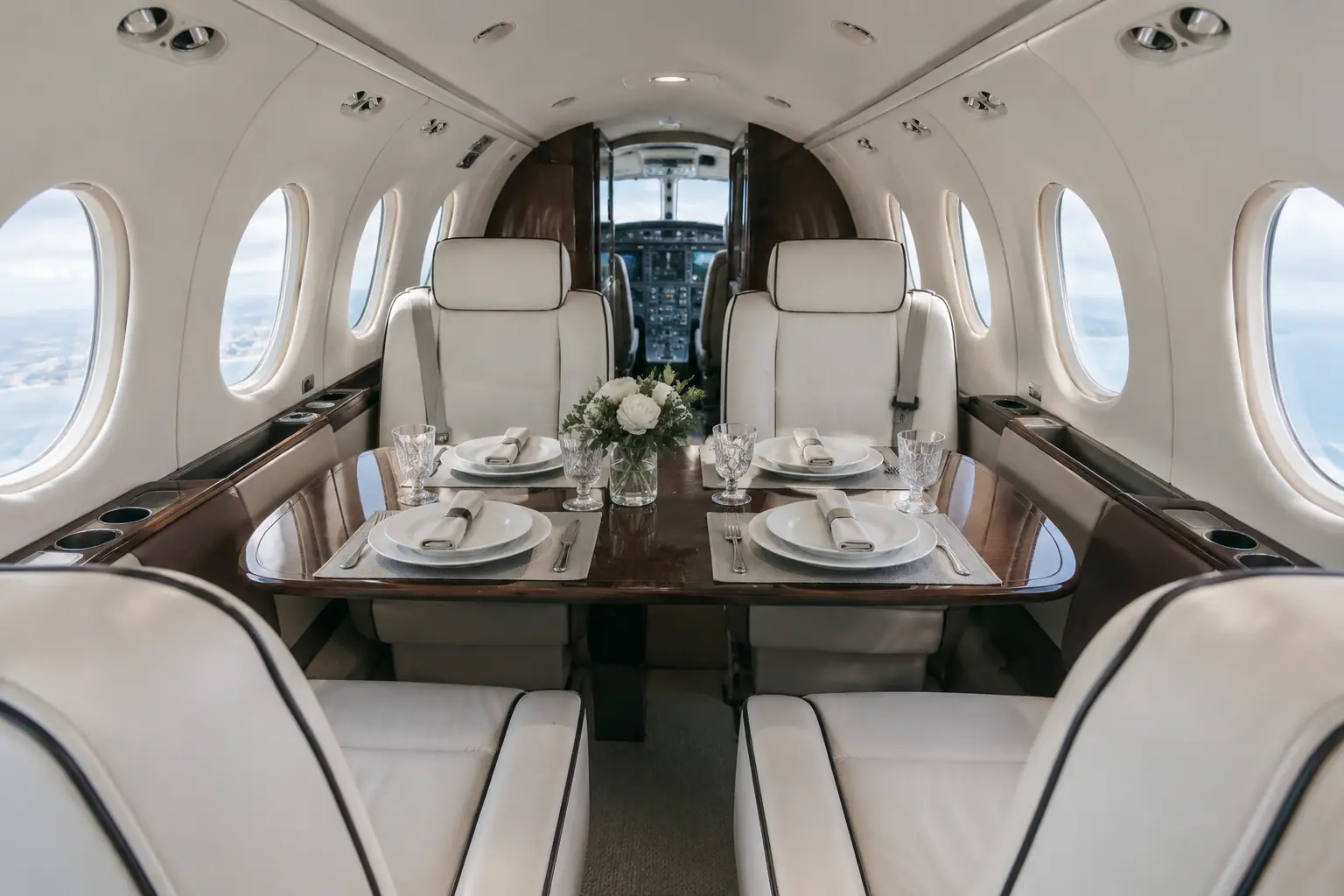
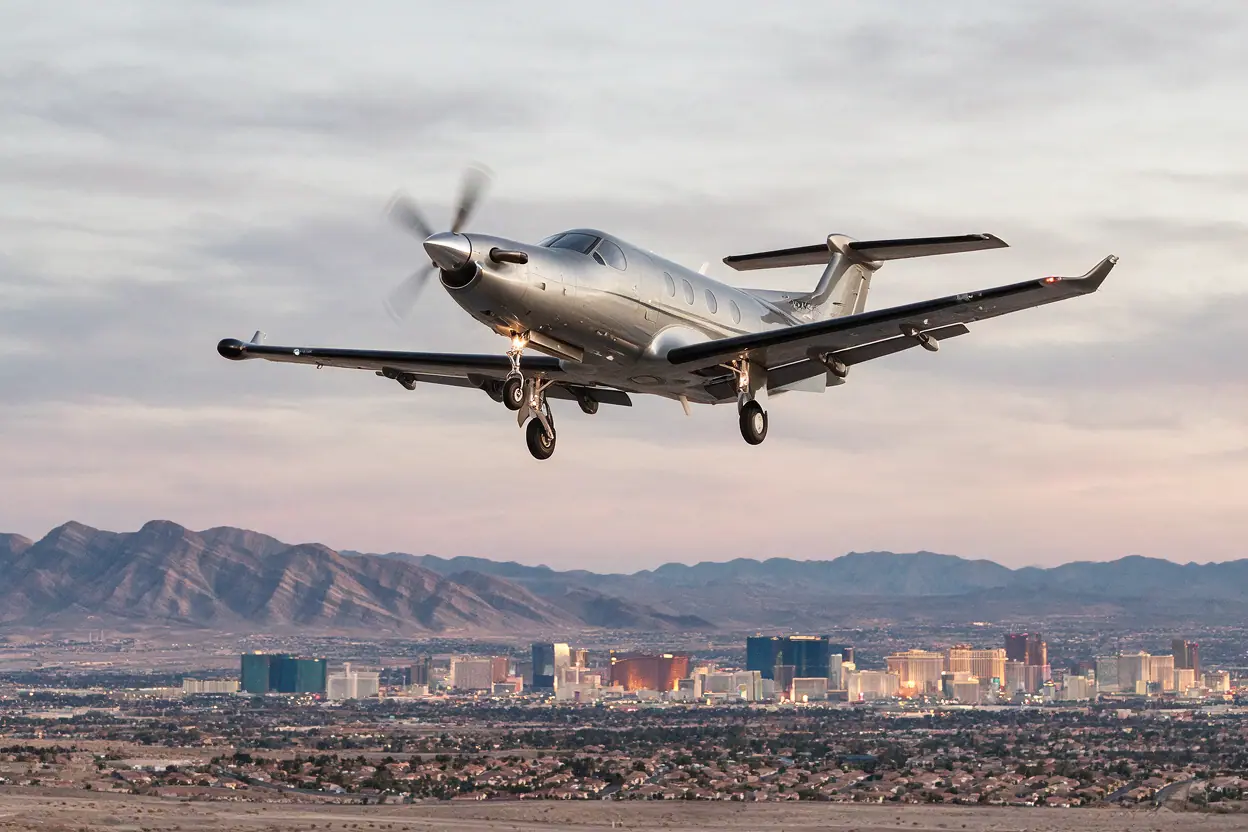
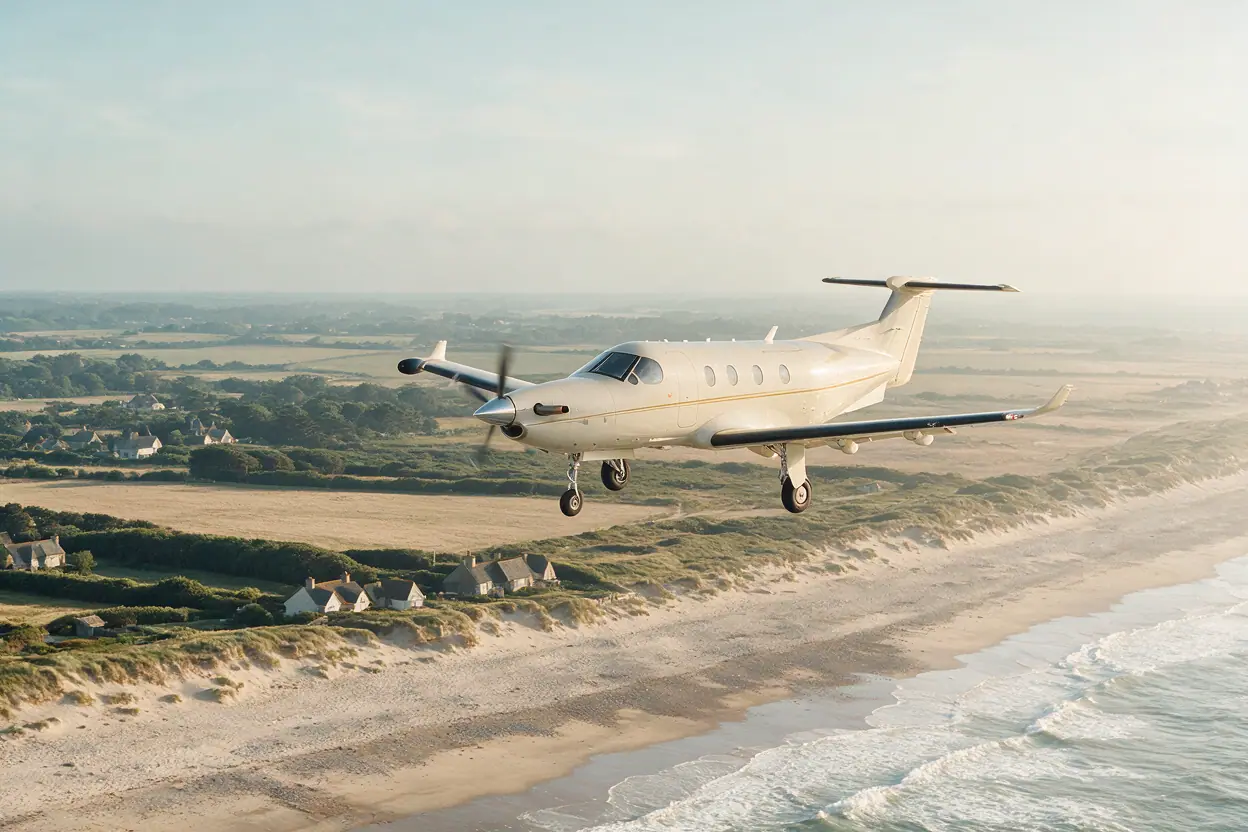
For 279 nautical miles, a turboprop is the sensible pick. A Beechcraft King Air 350i or Pilatus PC-12 NGX cruises at 290 to 312 knots, carries six to eight passengers, and lands in 1 hour 17 minutes. The PC-12 NGX has a 40-cubic-foot baggage bay and a cabin 4 feet 10 inches tall; the King Air offers 55 cubic feet. A light jet like a Citation Mustang or Phenom 100 flies the same distance in 59 minutes but costs $4,000 to $6,000, roughly $1,000 more for 18 minutes saved.
Midsize and larger jets only make sense if you need the cabin or the schedule. A midsize jet at $5,000 to $8,000 gets you there in 58 minutes with more stand-up room, while a super-midsize or heavy jet at $7,000 to $14,500 buys speed and comfort you cannot use on a 55-minute leg. If you are connecting to a long-haul flight at SFO, the larger cabin may be worth it; otherwise, the turboprop is the value play.
Daher TBM 960
- 6 seats
- 330 kt cruise
- 1,730 nm range
Cabin 4 ft tall, 13 ft 3 in long. Baggage 32 cu ft.
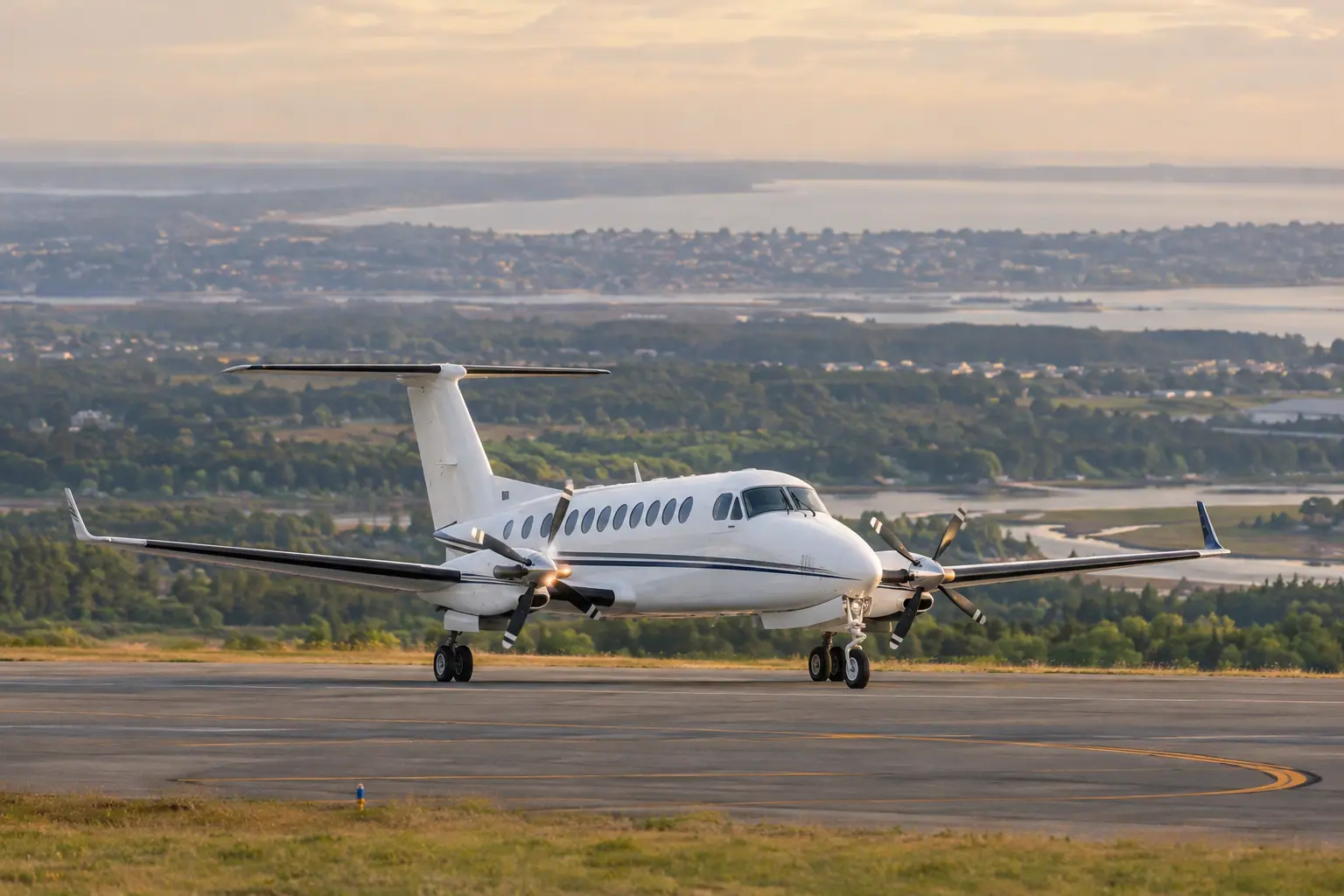
Beechcraft King Air 350i
- 8 seats
- 312 kt cruise
- 1,800 nm range
Cabin 4 ft 9 in tall, 16 ft 8 in long. Baggage 55 cu ft.
Leaving Los Angeles
Van Nuys Airport (KVNY) is the busiest general aviation field in the area, with an 8,001-foot runway and a central location for the San Fernando Valley and Westside. Burbank (KBUR) has a 6,886-foot runway and sits closer to Glendale and Pasadena, while LAX (KLAX) handles private flights from its fixed-base operators but adds commercial-terminal congestion. Most turboprop and light jet flights to San Francisco depart from Van Nuys or Burbank rather than LAX because the shorter taxi and smaller footprint save time on a 279-nautical-mile route.
If you are starting near Santa Monica or Long Beach, those airports also work, though Van Nuys and Burbank are the usual departure points for this trip. Under FAA Part 135 rules, the operating carrier controls the flight and the crew; the broker arranges the charter but does not operate the aircraft. That matters when you have a schedule to keep and need to know who is actually flying.
Arriving in San Francisco
San Francisco International (KSFO) has an 11,870-foot runway and is the closest big field to downtown, about 15 to 20 minutes by car outside rush hour. Oakland (KOAK) offers a 10,520-foot runway and can be a faster alternative if your destination is the East Bay or you are heading to a meeting in Oakland or Berkeley. For a short hop like this, the airport you pick on the San Francisco end often matters more than the aircraft class because ground time can eat the savings from a faster jet.
Both airports handle private and charter traffic, and both are subject to the same terminal and ramp procedures. If your trip continues internationally, CBP clearance is available at SFO, but for a domestic leg you simply walk off the aircraft. The 321-mile distance means you will spend more time in the car on the ground than in the air at either end, so pick the airport nearest your final stop.
| Airport | Code | Runway |
|---|---|---|
| San Francisco International Airport | KSFO / SFO | 11,870 ft |
| Oakland San Francisco Bay Airport | KOAK / OAK | 10,520 ft |
| Van Nuys Airport | KVNY / VNY | 8,001 ft |
| Hollywood Burbank/Bob Hope Airport | KBUR / BUR | 6,886 ft |
| Los Angeles International Airport | KLAX / LAX | 12,894 ft |
When prices peak on this route
Demand on the Los Angeles to San Francisco corridor peaks on Monday mornings and Thursday afternoons, when business travelers head to meetings and back, and again on Sunday evenings. If you can shift your departure to midday Tuesday or Wednesday, you will often find more aircraft available and better pricing. Book at least a week ahead for midweek travel; for Friday or Monday, two weeks is safer. The private jet price per hour Los Angeles to San Francisco climbs during major Bay Area events and the June through August tourist season, so lock in early.
Empty leg flights can cut the cost if you are flexible, but they are unpredictable on a route this busy. A turboprop booked two weeks out might fall in the $3,000 to $4,500 range; a same-week request on a peak day can push toward the top of the band or leave you with a larger, more expensive aircraft because nothing smaller is free. If your plans are firm, book early; if they are loose, ask about empty legs. Either way, the quote is an estimate until the operator confirms the aircraft and crew.
Routes like Los Angeles to San Francisco by private jet
The 6 city pairs below span 82 to 208 nautical miles, with one-way turboprop estimates running $2,000 to $3,500.
Inquiries for this leg
What is the private jet price per hour Los Angeles to San Francisco for a turboprop?
A turboprop like a Beechcraft King Air 350i or Pilatus PC-12 NGX typically costs $3,000 to $4,500 total for the 1-hour-17-minute flight. That is the full aircraft price, not per seat, and it covers up to six or eight passengers. The hourly rate works out lower than a jet because the aircraft is smaller and burns less fuel, but the total is what you actually pay.
How much does a light jet cost from Los Angeles to San Francisco?
A light jet such as a Citation Mustang or Embraer Phenom 100 runs $4,000 to $6,000 for the 59-minute trip. That is about $1,000 more than a turboprop, and you save roughly 18 minutes in the air. Whether that is worth it depends on your schedule and how much you value the extra speed on a 279-nautical-mile leg.
Can I do a same-day round trip by private jet between Los Angeles and San Francisco?
Yes. The flight is 55 minutes to 1 hour 17 minutes depending on aircraft, so a same-day return is easy if the aircraft waits for you. Expect to pay for the waiting time and the return leg, which usually brings the total to roughly double the one-way price. A turboprop might run $6,000 to $9,000 for the day; a light jet $8,000 to $12,000. These are estimates, so confirm with the operator.
Which airport should I use on the San Francisco end?
SFO (KSFO) is closest to downtown and has an 11,870-foot runway; Oakland (KOAK) has a 10,520-foot runway and can be faster if your destination is the East Bay. For this short route, the ground time often outweighs the air time, so pick the airport nearest your meeting or hotel. Both accept private flights and have the same ramp procedures.
How long does the flight take from Los Angeles to San Francisco?
Block time ranges from 55 minutes in a super-midsize or heavy jet to 1 hour 17 minutes in a turboprop. The distance is 279 nautical miles (321 statute miles). Add taxi and ground time at both ends, and you are looking at roughly two to two and a half hours door to door, which is competitive with commercial flying when you factor in security and terminal walks.
Is a turboprop or a jet better for this route?
For 279 nautical miles, a turboprop is usually the better value. It costs $3,000 to $4,500 versus $4,000 to $6,000 for a light jet, and you give up only about 18 minutes. A jet makes sense if you need a larger cabin, higher cruise altitude for weather, or a faster connection. The choice comes down to how you weigh time against total cost on a short hop.