Private jet hourly rates in Atlanta
Private jet hourly rates in Atlanta track aircraft class, and in 2026 our estimates run from $2,200 to $14,500 an hour. Turboprops sit at the bottom of that band and heavy jets at the top. DeKalb Peachtree is the field most Atlanta charters use.
- airport
- 1
- priced routes
- 0
- Home
- Atlanta
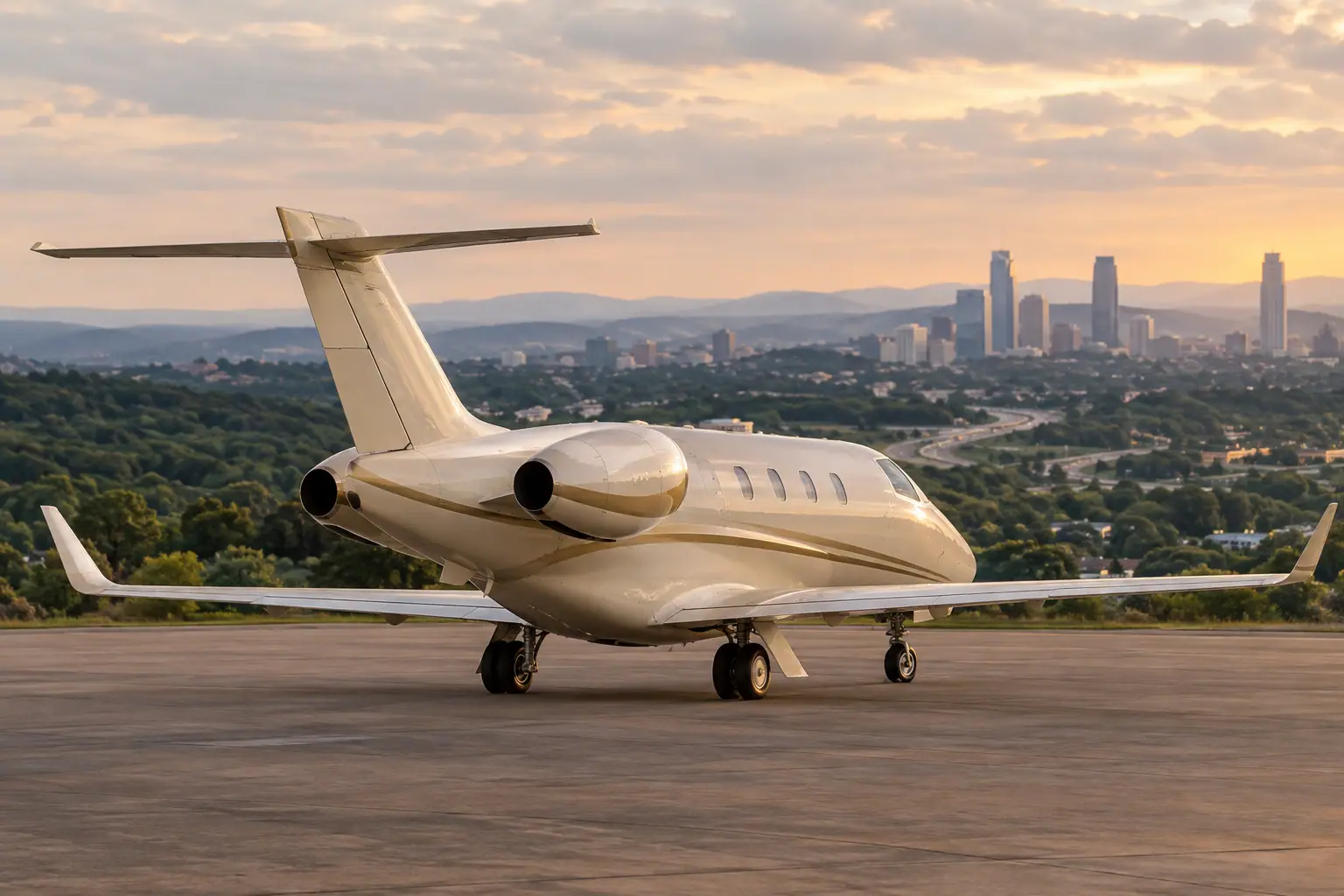
Private jet hourly rates in Atlanta start with the field. DeKalb Peachtree (KPDK) sits at 1,003 feet with a 6,001-foot runway, and those two numbers decide which aircraft classes work the field on a hot afternoon. Summer heat pushes density altitude toward 3,700 feet at 115F, which trims performance margins for light turboprops and light jets. Operators price around that constraint rather than pretend it does not exist.
The second variable is the route. Atlanta sits close enough to Florida, the Carolinas and the Northeast that light and midsize jets handle most trips, and those classes carry lower hourly rates than the heavy iron on typical Atlanta routes. Most legs fall inside midsize range of 2,100 nautical miles, so you rarely pay heavy-jet rates unless the trip needs the cabin or the legs.
Third is supply. Atlanta has one business-aviation field in the data we track, and July alone averages 17 wet days, so weather days stack up. When thunderstorms roll through DeKalb Peachtree, then departure slots compress and aircraft reposition from elsewhere, and that repositioning time lands in the quote. Ask how the operator bills the ferry leg before you compare two prices side by side.
One structural note before any number: the company you call arranges the trip, it does not fly it. Charter brokers work as agents under DOT Part 295, and the flights themselves sit with FAA Part 135 operators who hold operational control and the certificate. That split matters when you ask who answers for a maintenance decision or a crew duty limit.
Airports serving Atlanta

How to book a charter from Atlanta
Fix the trip before you shop
Give the operator passenger count, bags and the actual destination airport, not just the city. A light jet seats 4 to 7, so a group of eight changes the class and the hourly rate before anyone quotes you.
Match the class to the leg
Turboprops cruise near 300 knots and jets run 430 to 470, so a short hop to Charlotte or Birmingham may not justify jet rates. A cross-country leg will, because the time difference compounds over the route.
Check the operator, not just the price
Ask for the certificate holder's name and confirm the FAA Part 135 status directly. The broker is an agent; the operator carries the operational control and the safety obligations.
Plan around heat and weather
A July afternoon at KPDK with a 3,200-foot density altitude is a different departure than a cool morning. Build slack into the schedule on the 17 wet days July averages, and expect the operator to plan fuel and payload accordingly.
What Atlanta flying actually involves
KPDK is the field to know. DeKalb Peachtree sits 1,747 miles from the strip reference point used in our data, elevation 1,003 feet, longest runway 6,001 feet, with Atlantic Aviation and Signature Aviation on the field. Those runway and elevation numbers are comfortable for midsize equipment and workable for larger aircraft, which is why the field handles a broad mix. Climate matters more than geography here: monthly highs peak at 88F in July, and the wet-day count runs 17 in July and 16 in August. If your trip falls in that window, then a morning departure usually beats an afternoon one for both weather and performance. International legs add a CBP clearance step at the destination, and the operator will build that timing into the quote.
| Month | Avg high | Wet days |
|---|---|---|
| Jan | 52°F | 10 |
| Feb | 58°F | 13 |
| Mar | 64°F | 12 |
| Apr | 71°F | 10 |
| May | 79°F | 11 |
| Jun | 85°F | 15 |
| Jul | 88°F | 17 |
| Aug | 86°F | 16 |
| Sep | 82°F | 10 |
| Oct | 73°F | 8 |
| Nov | 63°F | 8 |
| Dec | 56°F | 11 |

Estimate a trip
Choose a route, travelers and bags to view the suitable class, flight duration and a price range.
Questions
What are private jet hourly rates in Atlanta by aircraft class?
Our 2026 estimates put turboprops at $2,200 to $3,500 an hour, light jets at $3,800 to $5,800, midsize at $5,200 to $7,800, super-midsize at $7,200 to $10,000 and heavy jets at $9,500 to $14,500. The class, not the city, sets the rate. Confirm the tail and the total before you commit.
Which airport do most Atlanta charters use?
DeKalb Peachtree, KPDK, is the business-aviation field in the data we track. It has a 6,001-foot longest runway and sits at 1,003 feet elevation, with Atlantic Aviation and Signature Aviation providing ground services. Larger aircraft can use it, but confirm your specific tail against the runway and the day's density altitude.
Does summer heat change the price?
It can. July density altitude at KPDK averages about 3,200 feet, and at 115F it reaches 3,700 feet. Higher density altitude reduces performance, so an operator may limit payload or fuel, or move the departure earlier. If the aircraft is weight-limited, then a larger class may be the only way to carry your full group.
How many wet days should I plan around in Atlanta?
July averages 17 wet days and August 16, based on the monthly figures we track. That is the wettest stretch of the year. If your trip lands in that window, then build schedule slack and expect departure sequencing around storms. It is a scheduling cost more than a rate change, though repositioning can add to the quote.
Is the company I book with the operator?
No. The broker acts as an agent under DOT Part 295, and the flight is conducted by an FAA Part 135 operator that holds operational control and the certificate. Ask for the certificate holder's name and verify it. That distinction tells you who answers for crew duty limits, maintenance and the safety management of the flight.
What range do Atlanta aircraft need?
It depends on the leg. Light jets cover about 1,400 nautical miles, midsize about 2,100, super-midsize about 3,200 and heavy jets about 4,000. Turboprops reach roughly 1,500. If your destination sits beyond the class range, then you move up a class and the hourly rate rises with it. Match the aircraft to the distance before comparing prices.
How do I compare two Atlanta quotes fairly?
Compare total price, not hourly rate. Ask whether the quote includes ferry repositioning, crew overnight, landing and handling at both ends, and any CBP fees on an international leg. TSA and CBP steps add time, not necessarily aircraft cost. Two quotes at the same hourly rate can land far apart once those lines are added.