
Private jet price per hour by aircraft
Private jet price per hour by aircraft starts at $2,200 for turboprops and reaches $14,500 for heavy jets. A light jet runs $3,800 to $5,800 per hour, while a heavy jet sits at $9,500 to $14,500. The spread tracks cabin size, range and how hard the operator works the fleet.
- Home
- Aircraft
Buyers usually start with a route and a date, then work backward to an airplane. That is the wrong order. The private jet price per hour by aircraft is set first by class and airframe, and only then adjusted for distance, airport fees, crew duty and repositioning. Comparing hourly rates first keeps a midsize quote from being judged against a light jet on the same city pair.
On the heavy side, a Falcon 900LX carries 12 passengers at 459 knots and lists 4,750 nautical miles of range. Nothing in the light category comes close, and the hourly number reflects that. Across the US fleet, the hourly spread between a turboprop and a heavy jet is roughly four to one, which is why class selection matters more than negotiation.
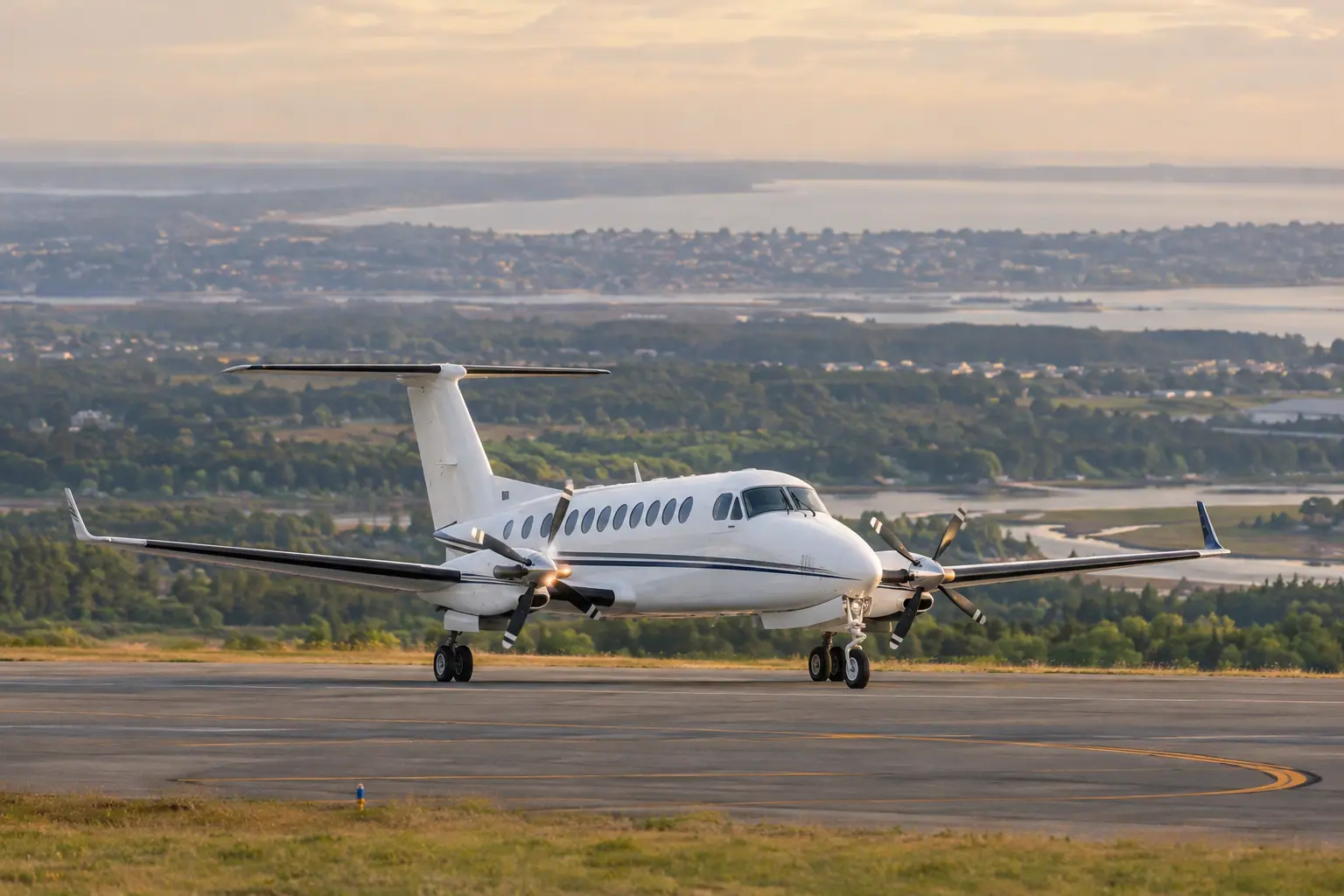
Turboprop
Turboprops open at $2,200 and top out near $3,500 per hour, the lowest entry point in the fleet. Cruise is around 300 knots over 1,500 nautical miles, with 6 to 8 seats. They shine on short runs into airports that bigger jets cannot use comfortably. A Beechcraft King Air 350i or Pilatus PC-12 NGX handles a 300-mile leg at a fraction of jet cost, though block time is longer and cabin noise is higher.
Daher TBM 960
- 6 seats
- 330 kt cruise
- 1,730 nm range
Beechcraft King Air 350i
- 8 seats
- 312 kt cruise
- 1,800 nm range
The King Air 350i carries 8 at 312 knots with 1,800 nautical miles of range and 55 cubic feet of baggage. It lands on runways that would make a jet crew think twice, which matters at smaller fields. Hourly cost sits in the turboprop band, well under any jet on this page. Expect about 4 feet 9 inches of cabin height, so taller passengers should plan seating carefully.
Light jet
Light jets quote $3,800 to $5,800 per hour for 4 to 7 seats at roughly 430 knots. Typical range is 1,400 nautical miles, which covers New York to Miami and Los Angeles to Cabo San Lucas with room to spare. A light jet is the default for regional business travel and weekend trips under three hours. Baggage space and cabin height are the usual constraints, so pack accordingly on longer legs.
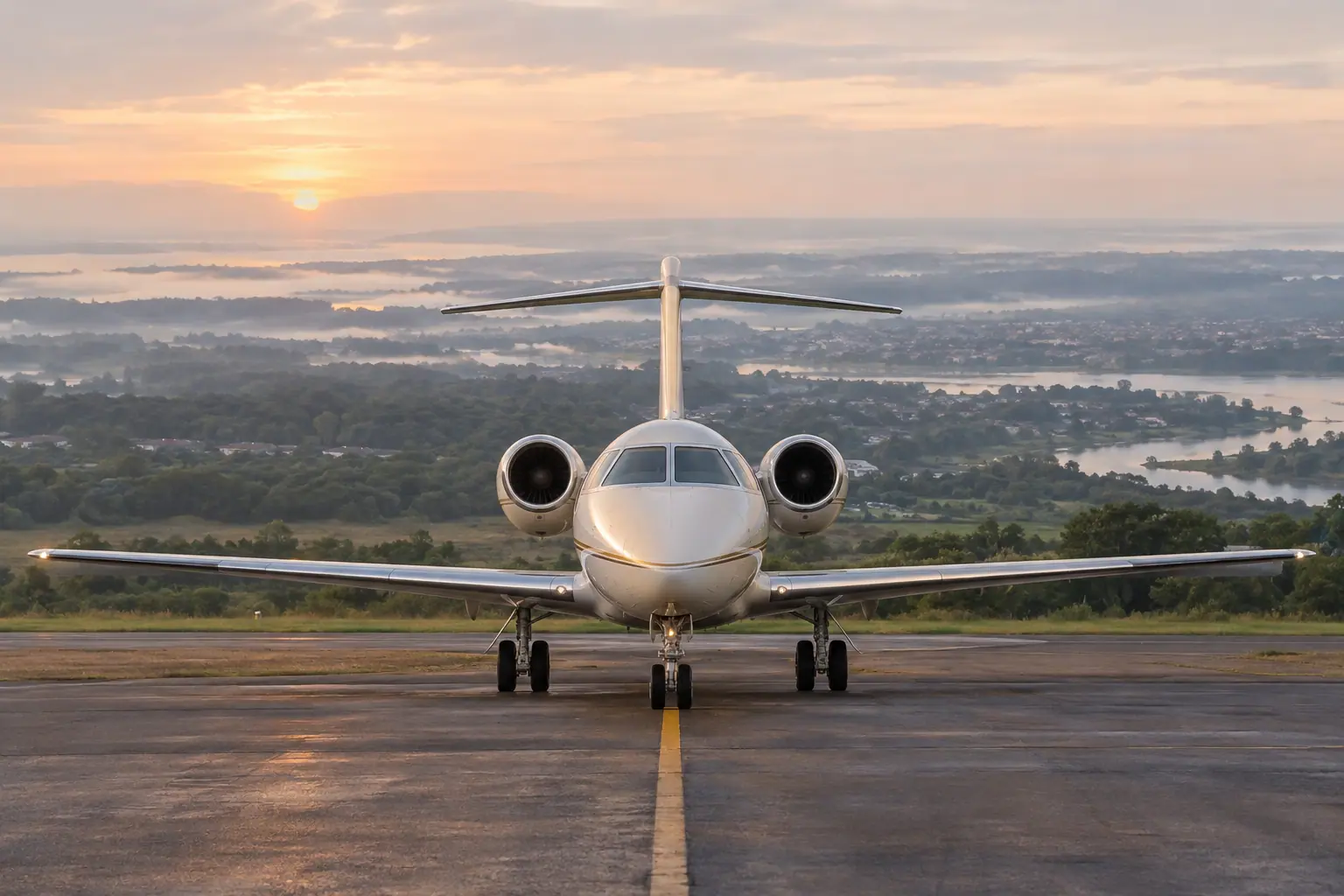
Embraer Phenom 300E
- 7 seats
- 464 kt cruise
- 2,010 nm range
Pilatus PC-24
- 8 seats
- 440 kt cruise
- 2,000 nm range
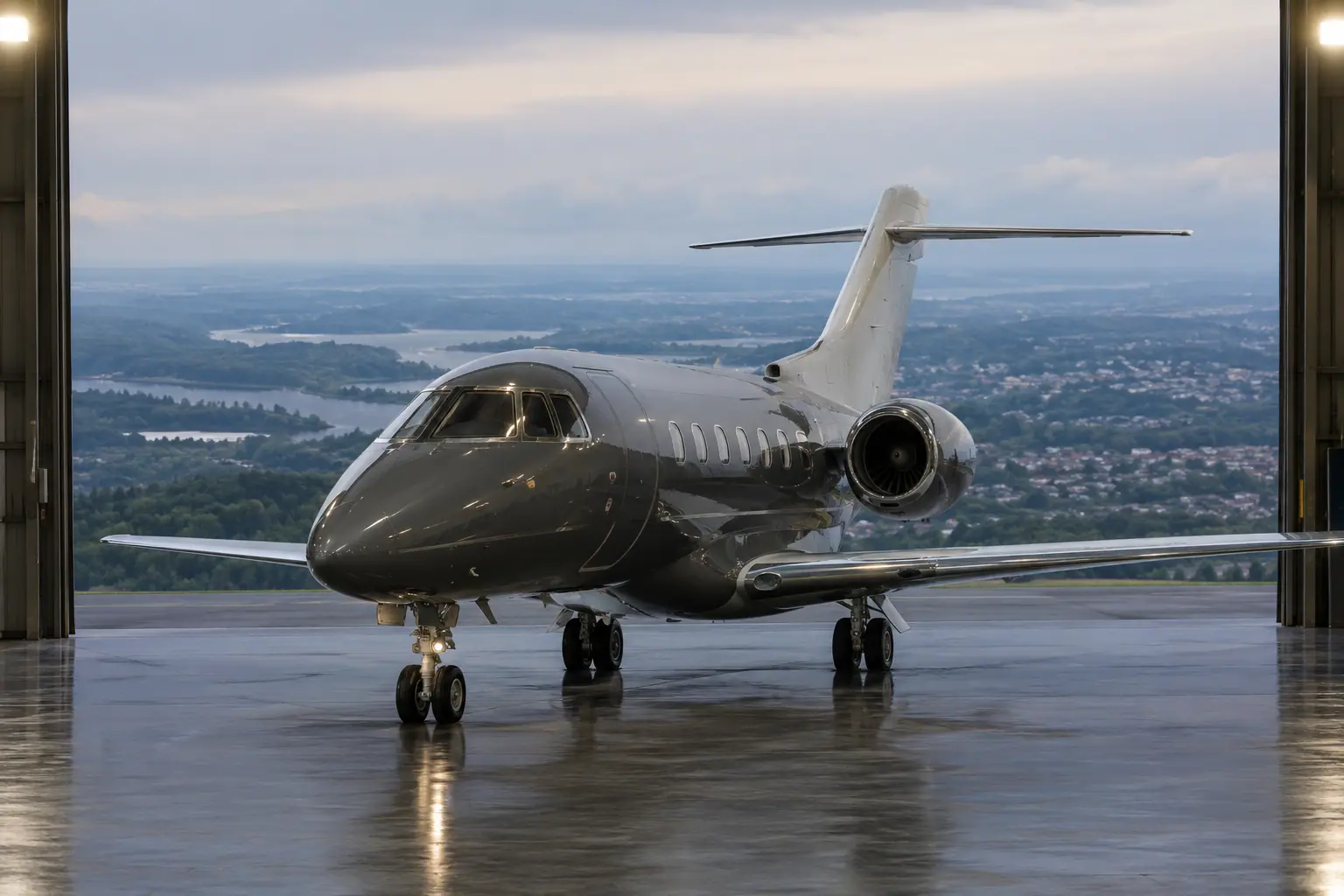
Midsize jet
Midsize jets run $5,200 to $7,800 per hour for 7 to 9 passengers at about 440 knots and 2,100 nautical miles. The cabin is stand-up in most airframes, which changes how a two-hour flight feels. Midsize covers the bulk of US transcontinental work with one fuel stop or none, and the Citation XLS+ and Hawker 800XP both sit in this band. Expect better baggage volume than a light jet.
Cessna Citation Latitude
- 9 seats
- 446 kt cruise
- 2,700 nm range
Hawker 800XP
- 8 seats
- 447 kt cruise
- 2,540 nm range
The Hawker 800XP carries 8 at 447 knots and 2,540 nautical miles in a 5 foot 9 inch cabin 21 feet long. Baggage is 50 cubic feet, tighter than some rivals. It is a workhorse midsize with a stand-up cabin and a wide operator base, which helps availability on short notice. Hourly pricing lands mid-band for the class and the airframe is well understood by maintenance shops.
Super-midsize jet
Super-midsize pricing lands at $7,200 to $10,000 per hour for 8 to 10 seats, 3,200 nautical miles and cruise near 470 knots. The Citation X+ pushes 527 knots, the fastest figure on this page. This class is the sweet spot for coast-to-coast nonstops with a full cabin. Cabin height clears six feet in the G280, and baggage compartments are large enough for golf bags and skis.
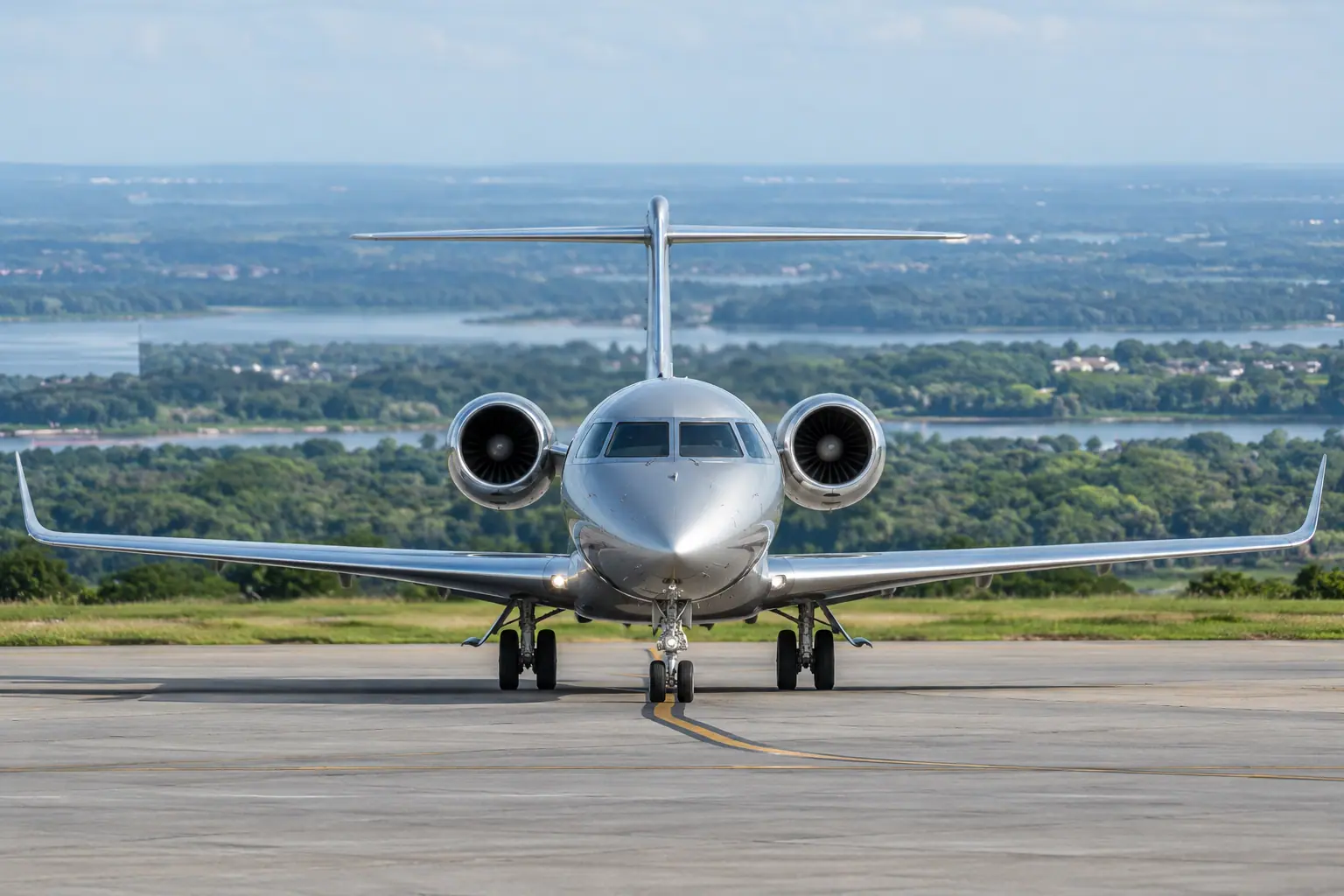
Bombardier Challenger 350
- 10 seats
- 470 kt cruise
- 3,200 nm range
Gulfstream G280
- 9 seats
- 482 kt cruise
- 3,600 nm range
The G280 carries 9 at 482 knots with 3,600 nautical miles of range, a 6 foot 3 inch cabin and 154 cubic feet of baggage. That combination handles coast-to-coast and transatlantic legs. It is among the fastest super-midsize options with a full stand-up cabin. Hourly pricing sits near the top of the class, but the range and baggage volume justify it on longer routes.
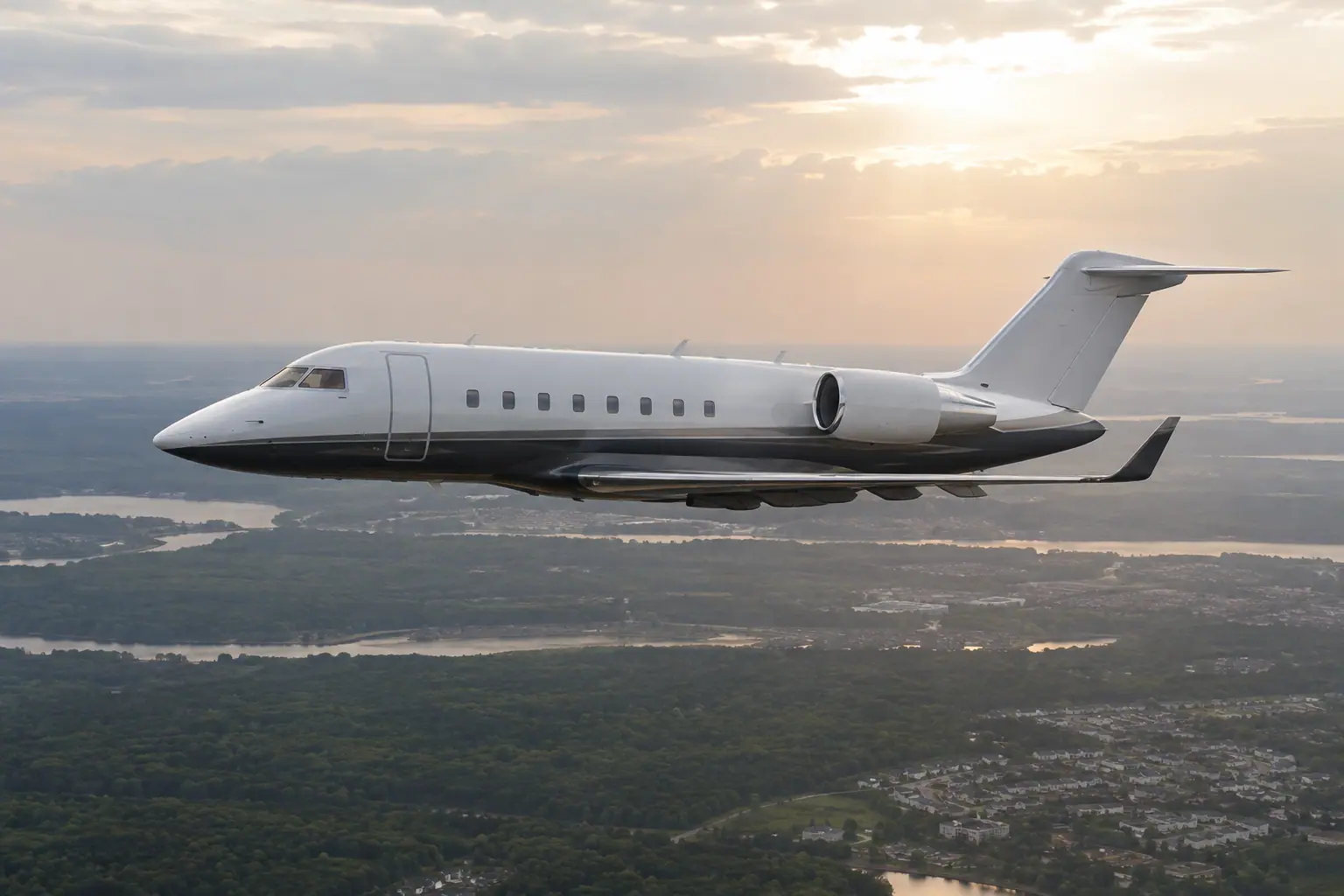
Heavy jet
Heavy jets cost $9,500 to $14,500 per hour for 10 to 14 passengers over 4,000 nautical miles. The Challenger 650 and Falcon 900LX both cruise near 470 knots with cabins over six feet tall and 28 feet or more of length. Heavy aircraft make sense when the leg is long, the party is large, or both. International crossings add CBP clearance and, on some routings, overflight permits into the quote.
Gulfstream G450
- 14 seats
- 476 kt cruise
- 4,350 nm range
Bombardier Challenger 650
- 12 seats
- 470 kt cruise
- 4,000 nm range
The Challenger 650 seats 12 at 470 knots with 4,000 nautical miles of range, a 6 foot 2 inch cabin 28 feet long and 115 cubic feet of baggage. It is a common choice for transatlantic and large-group domestic missions. Hourly pricing sits in the heavy band, and the wide cabin makes a six-hour leg far more comfortable than any super-midsize. Expect CBP clearance on international returns.
Choosing aircraft by hourly price
Start with the leg length and the number of people, then check the hourly band. A 949 nautical mile New York to Miami trip in a light jet runs about 2 hours 37 minutes and quotes roughly $10,000 to $15,000. If the route is under 1,400 nautical miles and the party is small, then a light jet usually wins on hourly price. Above that, the fuel stops and crew time on a light airframe start to erode the savings.
For a 2,129 nautical mile New York to Los Angeles leg, a light jet quotes about $23,500 to $36,000 and spends 6 hours 15 minutes in the air. A super-midsize does it faster and with a stand-up cabin. When the leg exceeds 2,000 nautical miles, then the hourly premium on a super-midsize often buys back a fuel stop and a shorter day. Ask the broker to show both numbers side by side before you commit.
Airport choice also moves the final figure. Teterboro sits at 9 feet elevation with a 6,997 foot runway, but its July density altitude climbs to 1,700 feet, and at 115F it reaches 2,300 feet. On a hot day at a high-density-altitude field, then the operator may restrict payload or fuel to keep performance margins, and that can change which aircraft type is quoted. Centennial outside Denver is the extreme case at 5,885 feet elevation, where July density altitude runs to 9,200 feet.
Questions
What is the private jet price per hour by aircraft for a light jet?
A light jet runs $3,800 to $5,800 per hour for 4 to 7 passengers at roughly 430 knots. The Citation CJ4 Gen2 carries 7 over 2,165 nautical miles in that band. Figures are estimates and exclude positioning, landing fees and crew overnight costs, so the final quote on a specific route will differ from the hourly headline.
How much does a heavy jet cost per hour compared with a turboprop?
A heavy jet runs $9,500 to $14,500 per hour against $2,200 to $3,500 for a turboprop, a spread of roughly four to one at the midpoint. The Falcon 900LX carries 12 passengers 4,750 nautical miles, while a King Air 350i carries 8 over 1,800 nautical miles. Class and mission length drive the difference far more than negotiation.
Does a coast-to-coast route cost more per hour than a short hop?
Not in hourly rate, but the total does climb because block time is longer. A New York to Los Angeles leg in a light jet takes 6 hours 15 minutes and quotes about $23,500 to $36,000. The same aircraft on Los Angeles to Las Vegas covers 199 nautical miles in 47 minutes for roughly $4,000 to $6,000. Hourly pricing is similar; the hours are not.
Which aircraft type is cheapest for a short regional trip?
A turboprop is the lowest-cost option on short legs, at $2,200 to $3,500 per hour for 6 to 8 seats. The PC-12 NGX carries 6 over 1,800 nautical miles at 290 knots. On a 158 nautical mile New York to Boston hop, a light jet quotes about $4,000 to $6,000, so the hourly gap narrows once fixed costs are spread over a short flight.
How do density altitude and airport elevation affect the hourly quote?
High elevation and heat cut performance, and operators price for it. Centennial sits at 5,885 feet with a July density altitude of 9,200 feet, and Harry Reid reaches 6,300 feet at 115F. On those days a midsize may be payload-restricted, so the quote may move to a longer-runway field or a different airframe. Ask for the performance numbers on your departure airport.
Who is responsible for the flight when I book through a broker?
The operating certificate holder has operational control and answers to the FAA under Part 135. The broker arranges the trip as an agent under DOT Part 295 and does not fly the aircraft. International legs add CBP clearance for passengers and crew, and some private terminals apply TSA screening rules. Confirm the operator's name and certificate before you sign.
Do empty leg flights change the price per hour by aircraft?
Yes. An empty leg is a repositioning flight sold at a discount because the aircraft has to move anyway. Rates vary widely and availability is unpredictable, so they do not replace the standard hourly bands of $3,800 to $5,800 for a light jet or $9,500 to $14,500 for a heavy jet. Treat an empty leg as a lucky find, not a planning tool.