Private jet hourly rates in Austin
Private jet hourly rates in Austin start near $2,200 for turboprops and top out around $14,500 for heavy jets. July density altitude at KAUS averages about 3,100 feet. These figures are estimates covering aircraft, crew, and fuel.
- airport
- 1
- priced routes
- 0
- Home
- Austin
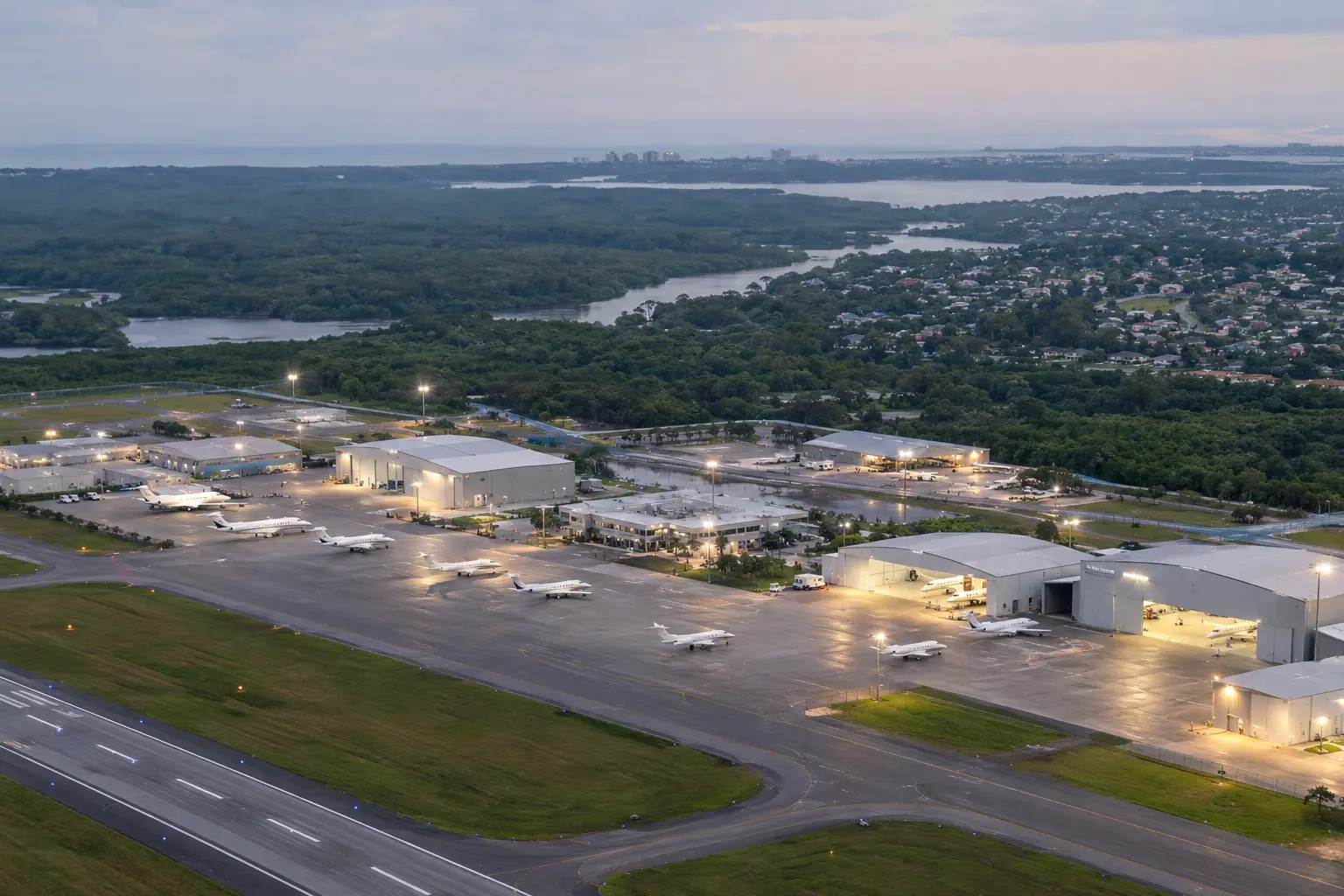
Austin Bergstrom (KAUS) is the main departure point, with a 12,250-foot runway at 542 feet elevation and three FBOs: Atlantic Aviation, Signature Aviation, and Henriksen Jet Center. Most charter flights begin and end here, though some operators use the smaller reliever fields around town. Because KAUS is a busy commercial airport, slot timing and ramp space can push departures into tighter windows at peak hours, and that scheduling pressure can affect the hourly quote if your trip needs a specific departure time.
Summer heat is the local pricing lever. The July density altitude at KAUS averages about 3,100 feet, and at 115°F it climbs to roughly 3,700 feet. Light jets with full fuel and full seats sometimes need a fuel stop or a weight restriction on hot afternoons, which adds an hour or two to the billed time. Midsize and super-midsize aircraft handle the heat better, so the apparent hourly gap between classes narrows on a long summer trip.
Typical routes from Austin run to Dallas, Houston, and San Antonio for short hops; to Denver, New Orleans, and Nashville for regional trips; and to New York, Los Angeles, and South Florida for longer legs. Empty-leg flights out of Austin appear when an operator needs to reposition after a drop-off, and those one-way rates can be well below the round-trip hourly figure. If your schedule is flexible, ask specifically about empty legs rather than assuming the hourly rate is fixed.
Airports serving Austin
How to price a charter from Austin
Match the aircraft class to the trip length
A light jet at $3,800 to $5,800 per hour makes sense for Dallas or Houston, where block time is under an hour. For Los Angeles or New York, a super-midsize or heavy jet at $7,200 to $14,500 per hour usually works out cheaper per mile because you avoid a fuel stop.
Ask for the all-in hourly number
Operators quote either a dry rate plus crew and fuel or a single wet rate. Ask which one you are getting, and whether landing fees, overnight crew costs, and federal excise tax are included. A quote that looks low per hour can grow once those line items are added.
Check the operator's certificate
Charter flights must be flown by an operator holding FAA Part 135 authority and operational control. A broker arranges the flight as an agent under DOT Part 295 but does not operate the aircraft. Ask for the operator's name and certificate number before you book.
Book around the heat and the calendar
July and August afternoons at KAUS carry the highest density altitude, so morning departures can preserve payload on light jets. Around major Austin events, aircraft and crew are tighter, and hourly rates on short-notice trips tend to run at the top of the published range.
Austin airports and availability
KAUS is the primary field, and its 12,250-foot runway accommodates every class from turboprop to heavy jet. The three FBOs handle different mixes of charter and private traffic, and which one your operator uses can affect the ramp fee passed through to you. Reliever airports around the metro area sometimes have shorter runways and limited instrument approaches, so a heavy jet may not be an option there. During South by Southwest, Formula 1 weekend at Circuit of the Americas, and major University of Texas home games, demand for Austin-based aircraft spikes. If you are flying into or out of those windows, book early and expect the higher end of the hourly range.
| Month | Avg high | Wet days |
|---|---|---|
| Jan | 61°F | 8 |
| Feb | 65°F | 10 |
| Mar | 74°F | 10 |
| Apr | 79°F | 12 |
| May | 85°F | 15 |
| Jun | 91°F | 11 |
| Jul | 95°F | 7 |
| Aug | 96°F | 8 |
| Sep | 90°F | 9 |
| Oct | 82°F | 8 |
| Nov | 70°F | 9 |
| Dec | 65°F | 8 |

Estimate a trip
Choose a route, travelers and bags to view the suitable class, flight duration and a price range.
Questions
What are the private jet hourly rates in Austin for a light jet?
Light jets in Austin run about $3,800 to $5,800 per hour in 2026. That class seats 4 to 7 passengers with roughly 1,400 nautical miles of range, covering Dallas, Houston, New Orleans, and most of the Mountain West. On hot July afternoons, when density altitude at KAUS reaches about 3,100 feet, a full light jet may face a weight limit or fuel stop, so the effective hourly cost rises.
How much does a heavy jet cost per hour from Austin?
Heavy jets price at about $9,500 to $14,500 per hour. They seat 10 to 14 passengers and have around 4,000 nautical miles of range, enough for Austin to Los Angeles or New York nonstop with a full cabin. The 12,250-foot runway at KAUS easily handles this class. Expect the top of that range during event weeks and on short-notice bookings.
Do empty-leg flights from Austin have lower hourly rates?
Yes, empty legs can price well below the standard hourly rate because the operator is repositioning and wants to offset the cost. They appear when an aircraft drops passengers in Austin and needs to return elsewhere. Availability is unpredictable and the schedule is usually firm. If you can move your departure by a day, ask your broker to watch for empty legs on your route.
How does Austin heat affect jet performance and price?
At KAUS, the July density altitude averages about 3,100 feet and reaches roughly 3,700 feet at 115°F. High density altitude reduces lift and engine performance, so a light jet may need a shorter fuel load or fewer passengers. If the operator has to add a fuel stop, you pay for the extra flight hour. Midsize and larger jets are less affected, which can make them the better value on long summer trips.
Which airports serve private jet charter in Austin?
Austin Bergstrom International (KAUS) is the main option. It sits at 542 feet elevation, has a 12,250-foot runway, and hosts Atlantic Aviation, Signature Aviation, and Henriksen Jet Center. Smaller reliever fields around the metro handle lighter aircraft, but their shorter runways may not suit a heavy jet. Your operator will tell you which FBO they use, and the ramp fee can vary by location.
Who is responsible for the flight when I book through a broker?
The operating certificate holder is responsible. Charter flights must be conducted by an operator with FAA Part 135 authority and operational control, and the broker acts as an agent under DOT Part 295. Before booking, ask for the operator's name and certificate. For international legs, CBP handles customs clearance, and TSA rules apply at some facilities. Knowing who operates the flight matters more than the hourly rate alone.