Private jet hourly rates in Boston
Private jet hourly rates in Boston start at $2,200 per hour. A New York to Boston leg runs 158 nautical miles from $4,000 to $14,500. Here is what drives the number up or down.
- airport
- 1
- priced routes
- 1
- New York → Boston, light jet
- $4,000–$6,000
- Home
- Boston
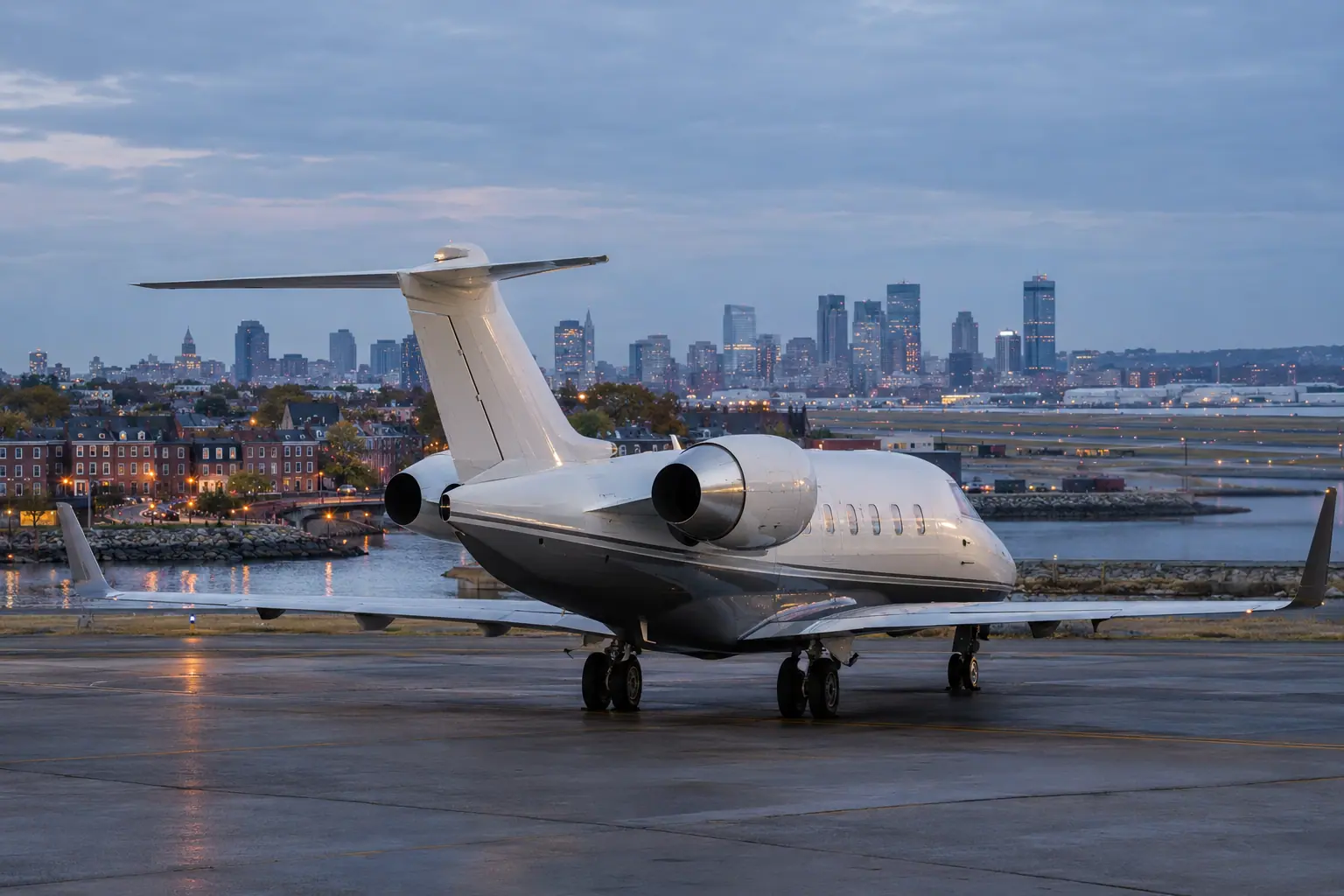
Boston is a small-airport city for general aviation. Laurence G Hanscom Field (KBED) west of town is where most charter activity lands, with a 7,011-foot runway and four FBOs on the field: Jet Aviation Bedford, Atlantic Aviation, Signature Aviation and FlightLevel Aviation. Logan does handle private movements, but Hanscom keeps you out of airline congestion and is a shorter hop to the western suburbs and Route 128. The field sits at 133 feet elevation, and July density altitude runs around 1,900 feet, so summer departures still have margin for midsize and larger aircraft.
Typical trips out of Boston fall into a few buckets. Short hops to New York, Philadelphia and Washington fill the light and midsize categories. Florida and Caribbean runs push you toward super-midsize or heavy metal for range and baggage. Transatlantic work needs a heavy jet and, on the return, a CBP stop at a port of entry. The New York to Boston route shows the short-haul math well: 158 nautical miles, 0h 41m in a light jet or midsize, 0h 39m in a heavy, with quotes from $4,000 to $14,500.
What changes the price here is availability and positioning more than distance. Boston is not a huge based-fleet market, so a one-way departure may require ferrying an aircraft in, which raises the hourly figure. Winter weather adds de-icing and routing time, and summer density altitude at Hanscom can trim payload on the hottest afternoons. If your dates are flexible, then midweek departures often quote lower than Friday afternoons. Empty legs out of KBED appear when operators reposition, and they are the main way to beat the hourly rate.
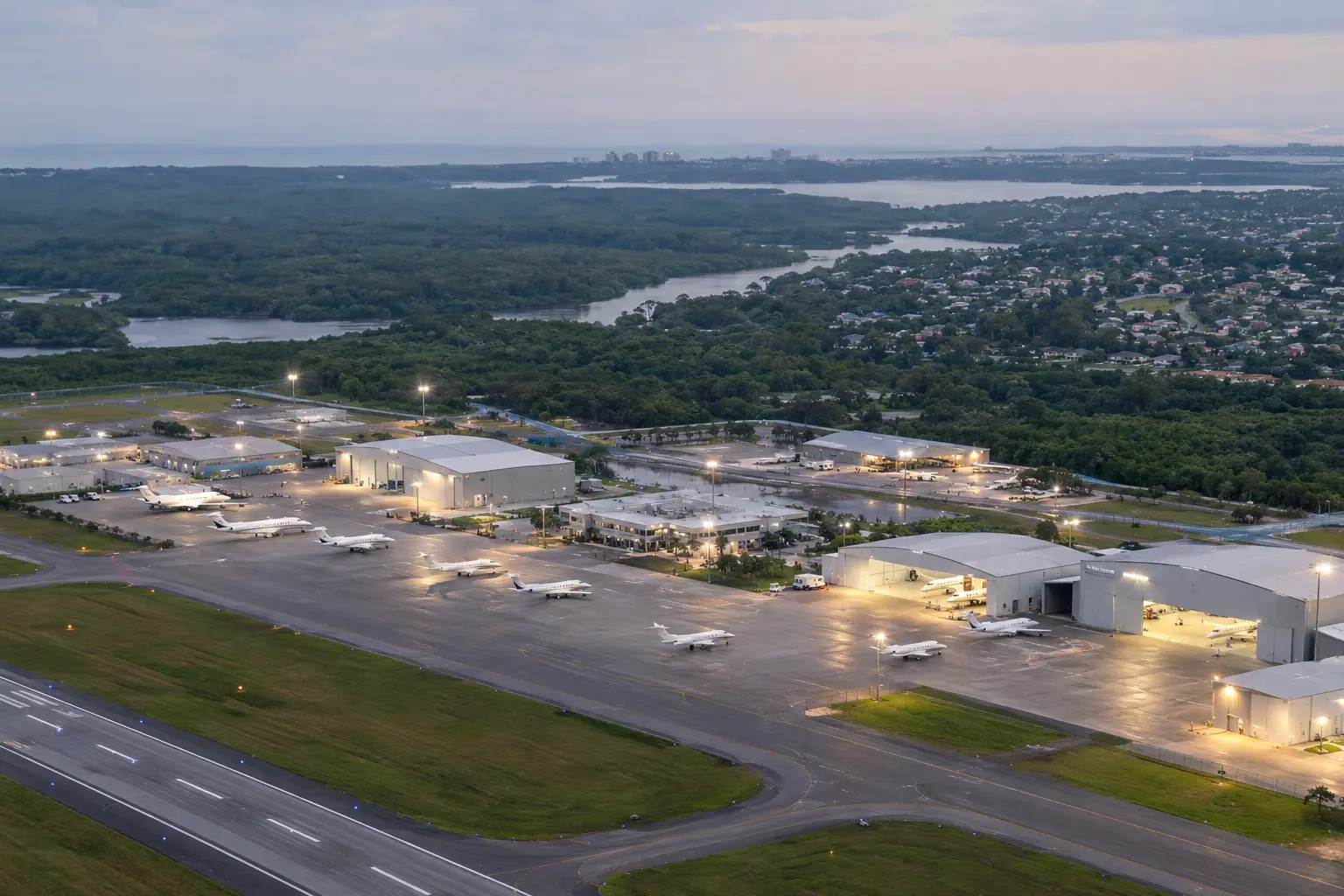
Airports serving Boston
How to book a charter from Boston
Start with the mission, not the aircraft
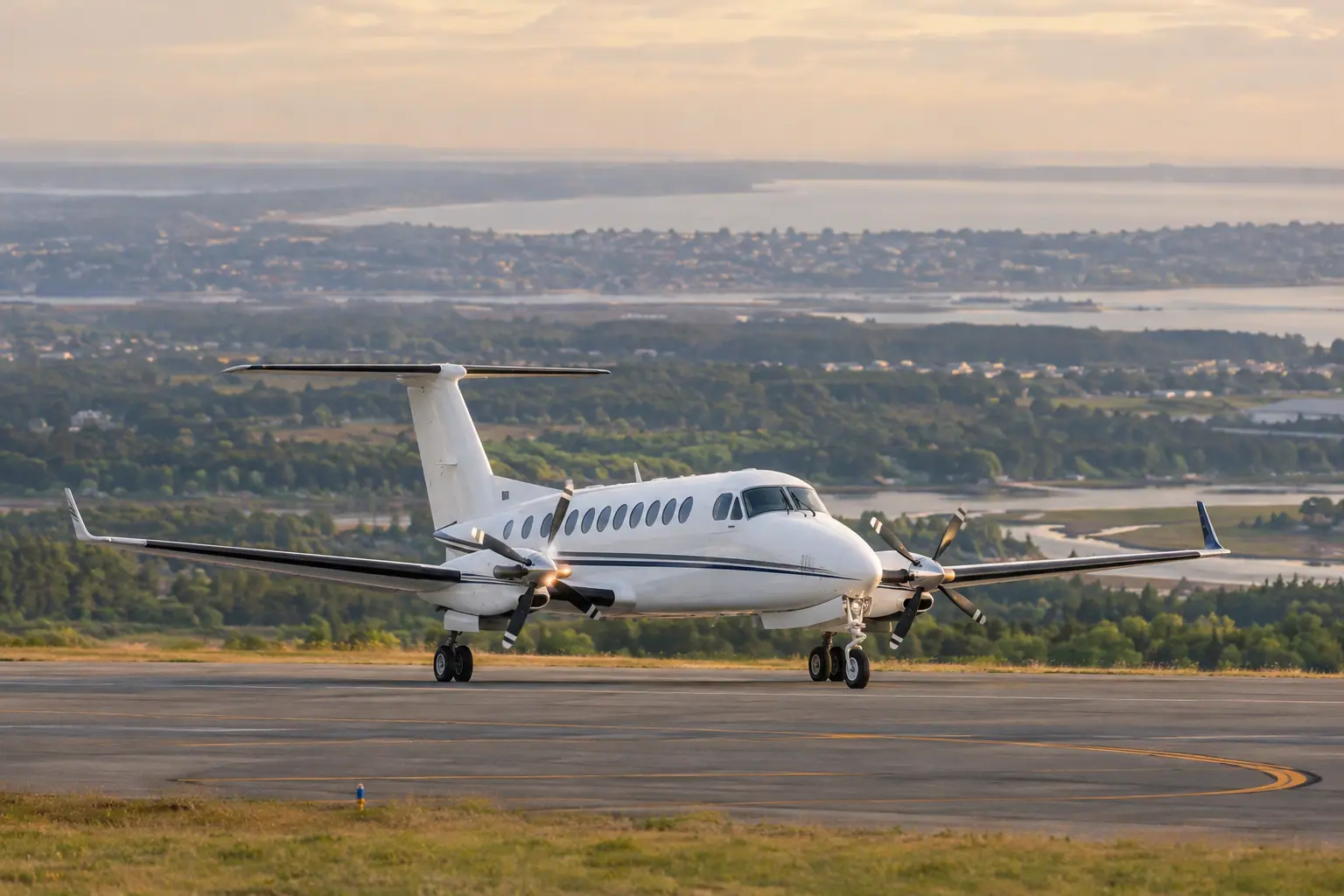
Give the broker your passengers, bags, and destination, then let the class follow. A light jet carries 4-7 with 1,400 nautical miles of range; a heavy jet carries 10-14 and reaches 4,000. If the trip is under 400 nautical miles, then a turboprop at $2,200 to $3,500 per hour often beats a jet on total cost.
Compare quotes across classes
Ask for the same trip priced in two or three classes so you can see the hourly spread. Midsize runs $5,200 to $7,800 per hour and super-midsize $7,200 to $10,000, which is a real jump for a short leg. On a 158-nautical-mile New York to Boston run, the difference between light and heavy is $4,000 to $14,500 all in.
Check the operator, not just the price
Charter flights are flown by FAA Part 135 operators who hold operational control; your broker arranges and is paid as an agent under DOT Part 295. Ask who the operator is and confirm their certificate before you sign. If the quote comes from a broker, then the operating certificate belongs to someone else, and you should know whose.
Plan around Hanscom and the season
Build in time for de-icing from November through March and expect density altitude near 1,900 feet in July. International legs need CBP clearance on arrival, and passengers clear TSA at the FBO. If you are flying to the Caribbean, then confirm customs arrangements before booking rather than after.
What the rates look like by class
Read the hourly bands as a range, not a quote. Turboprops price from $2,200 to $3,500 per hour, light jets $3,800 to $5,800, midsize $5,200 to $7,800, super-midsize $7,200 to $10,000, and heavy jets $9,500 to $14,500. Those are estimates for the aircraft hour; the bill also carries taxi time, positioning, crew and landing fees. The New York to Boston route gives a concrete example at 158 nautical miles: a light jet or midsize quotes $4,000 to $8,000 for 0h 41m, and a heavy jet $9,500 to $14,500 for 0h 39m. On a leg that short, you are paying for the aircraft and crew day more than the distance flown.
| Route | Light jet | Midsize | Heavy |
|---|---|---|---|
| New York → Boston | $4,000–$6,000 | $5,000–$8,000 | $9,500–$14,500 |
Boston airport notes
Laurence G Hanscom Field is the practical base for most Boston charters, with a 7,011-foot runway and four FBOs handling arrivals and departures. The field elevation is 133 feet, and the July density altitude figure of roughly 1,900 feet is worth knowing if you are loading a light jet on a hot afternoon. Peak summer conditions push density altitude to about 2,400 feet at 115F, which can matter for takeoff performance on shorter runways elsewhere on your route. Logan remains an option for some itineraries, but Hanscom usually means less taxi time and easier ground handling.

Estimate a trip
Choose a route, travelers and bags to view the suitable class, flight duration and a price range.
Questions
What are private jet hourly rates in Boston by aircraft class?
Expect roughly $2,200 to $3,500 per hour for a turboprop, $3,800 to $5,800 for a light jet, $5,200 to $7,800 for midsize, $7,200 to $10,000 for super-midsize, and $9,500 to $14,500 for a heavy jet. These are estimates for the flight hour and exclude positioning, crew overnight and landing fees.
How much does a New York to Boston charter cost?
The route is 158 nautical miles and prices from $4,000 to $6,000 in a light jet, $5,000 to $8,000 in a midsize, and $9,500 to $14,500 in a heavy. Flight time is about 0h 41m in light and midsize aircraft and 0h 39m in a heavy. Short legs carry a fixed cost floor, so the hourly rate matters less than the minimum billing.
Which airport serves private flights in Boston?
Laurence G Hanscom Field (KBED) is the main general aviation field, with a 7,011-foot runway, an elevation of 133 feet, and four FBOs: Jet Aviation Bedford, Atlantic Aviation, Signature Aviation and FlightLevel Aviation. Logan handles some private movements, but Hanscom is easier for most western-suburb departures and avoids airline terminal traffic.
Does summer heat affect departures from Hanscom?
Yes. July density altitude at Hanscom averages about 1,900 feet, and at 115F it can reach roughly 2,400 feet. That reduces available performance, especially in light jets and turboprops, so payload or fuel may be limited on the hottest afternoons. Operators plan for it, but it can change which aircraft can make a long leg nonstop.
Who is responsible for the flight on a Boston charter?
The flying is done by FAA Part 135 operators, who hold operational control and the operating certificate. If you book through a broker, then the broker acts as an agent under DOT Part 295 and arranges the flight rather than operating it. Ask for the operator name and certificate before you commit, and confirm TSA and CBP arrangements for international legs.
Can I find empty legs out of Boston?
Sometimes. Empty legs appear when an operator repositions an aircraft into or out of KBED and sells the return at a reduced rate. They are unpredictable and usually posted close to the date, so flexibility helps. If your schedule is fixed, then a standard charter quote is the more reliable path, priced at the hourly band for your class.