Private jet price per hour Harry Reid
Private jet price per hour Harry Reid depends on aircraft weight, seasonal demand, and the desert heat. At 2,181 feet elevation with a 14,835-foot runway, LAS handles most business jets comfortably. Estimates start around $2,600 per flight hour for light jets.
- airport codes
- KLAS · LAS
- airport alt.
- 2,181 ft
- longest runway
- 14,835 ft
- to New York
- 0 mi
Private jet price per hour Harry Reid is not a single posted rate. Charter quotes for Harry Reid International Airport (LAS) combine hourly flying time with crew duty, fuel, airport fees, and positioning. A light jet might run $2,600 to $3,800 per hour, a midsize $4,500 to $6,200, and a super-midsize or heavy above that. These are estimates, and the operator sets the final figure.
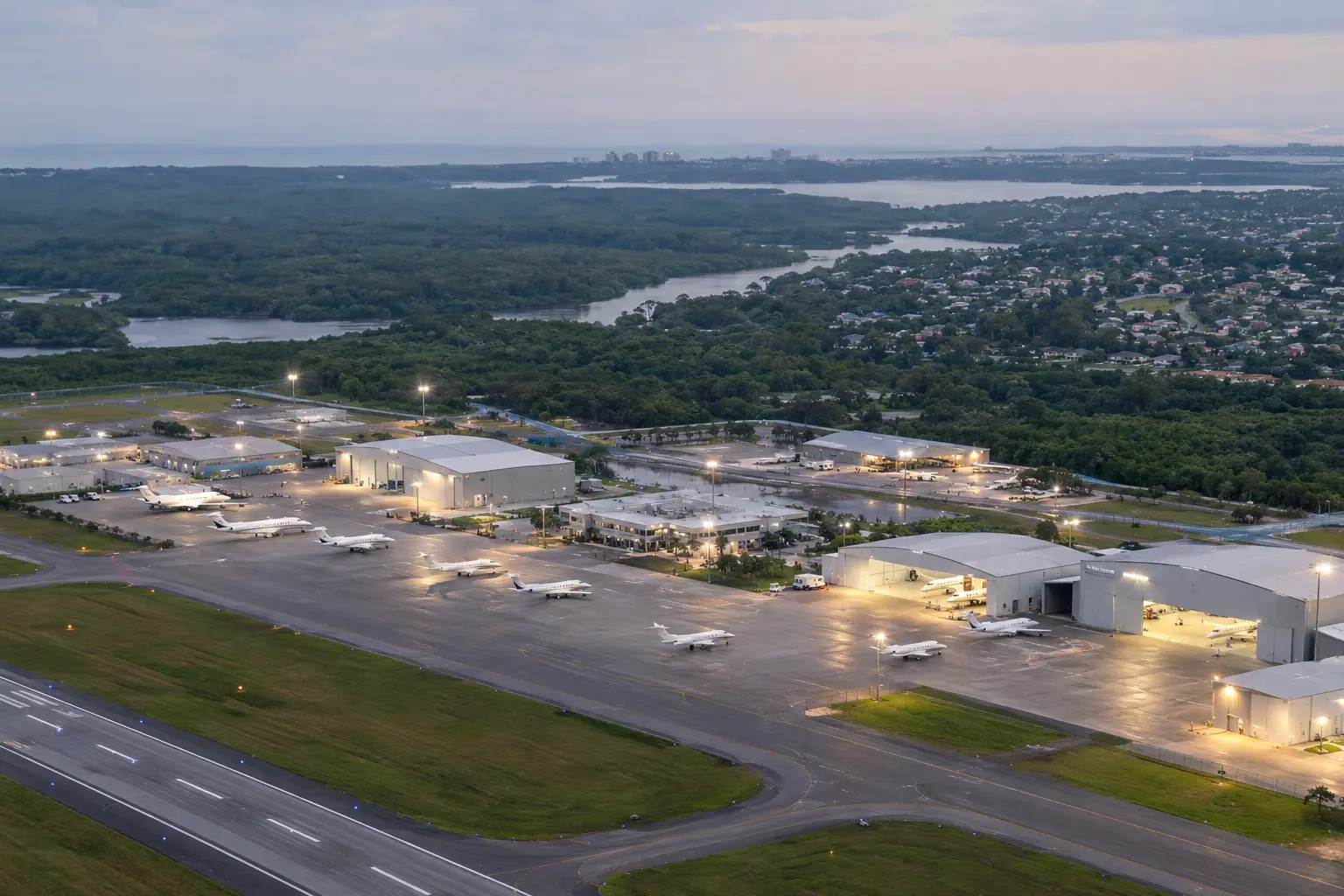
Jets at Harry Reid International Airport (LAS) use the same runways as the airlines, but general aviation traffic is handled at the FBOs rather than the main terminal. The airport sits 2 miles from the Strip, which makes it unusually convenient for a casino or convention trip. Because LAS is a public-use airport with commercial service, private flights share the airspace and taxi routes with scheduled carriers, so slot timing matters on busy weekends.
A charter broker arranges the flight while a certificated operator runs it, which is the legal structure under DOT Part 295 and FAA Part 135. The broker sources quotes from operators, compares aircraft, and handles the contract; the operator retains operational control and provides the crew. For international legs, CBP clearance is handled at the arriving airport. That separation matters when comparing prices, because two quotes for the same route can reflect different aircraft, crew rest rules, or fee structures.
Runways at Harry Reid
The longest runway at Harry Reid stretches 14,835 feet, which is more than enough for any business jet at the airport's 2,181-foot elevation. A 14,835-foot runway at 2,181 feet elevation gives most jets a comfortable margin, even on a hot July afternoon. Summer density altitude can reach 5,800 feet in July and 6,300 feet at the peak 115F condition, which reduces performance but rarely restricts the jets that typically serve LAS. Pilots still calculate takeoff distance and climb gradient for each departure, and on the hottest days a heavy long-range jet may face a weight restriction. If your trip is nonstop to Europe or Asia, then the operator may plan a fuel stop or a lighter payload. For domestic routes, the runway length is rarely the limiting factor.
| Runway | Length | Width | Surface |
|---|---|---|---|
| 08L/26R | 14,835 ft | 150 ft | Asphalt |
| 08R/26L | 10,526 ft | 150 ft | Asphalt |
| 01L/19R | 9,770 ft | 150 ft | Concrete |
| 01R/19L | 9,769 ft | 150 ft | Asphalt |
FBOs at Harry Reid
Two FBOs serve general aviation at Harry Reid: Atlantic Aviation and Signature Aviation. Atlantic Aviation and Signature Aviation handle private jet arrivals at LAS and both offer fueling, hangar space, and passenger lounges. Which one your flight uses depends on the operator's preference and the ramp space available on the day.
If you are comparing quotes, then ask which FBO is included, because handling fees differ and some operators pass them through separately. For a Strip trip, the FBO choice is less important than the 2-mile transfer, which is quick by taxi or courtesy car. Both FBOs operate under airport security rules, and international arrivals coordinate with CBP. When a large event like a convention or a fight night fills the ramp, then inbound slots can tighten and the operator may adjust timing.
Best for
- Strip and convention trips where the 2-mile transfer saves time and the airport's airline-scale infrastructure keeps ground handling predictable.
- West Coast routes from LAS to Van Nuys (229 miles) or San Francisco (411 miles) that suit light and midsize jets on a short hop.
- Transcontinental flights to Teterboro (2,227 miles) or Miami-Opa Locka (2,170 miles) that need a super-midsize or heavy jet with range.
- International arrivals that clear CBP at LAS rather than a diversion, when the operator confirms the clearance arrangement in advance.
| Class | Typical runway need | Here |
|---|---|---|
| Turboprop | 3,300 ft+ | Fits |
| Light jet | 4,000 ft+ | Fits |
| Midsize jet | 5,000 ft+ | Fits |
| Super-midsize jet | 5,200 ft+ | Fits |
| Heavy jet | 5,600 ft+ | Fits |
Heat and density altitude by season
Density altitude at Harry Reid peaks in July at about 5,800 feet and can reach 6,300 feet at 115F, which affects takeoff and climb performance for every jet. July density altitude near 6,300 feet at 115F is the number pilots plan around when departing LAS in summer. In winter the picture changes: January highs average 57F with a density altitude around 2,600 feet, which is close to a sea-level airport in milder weather. Spring and fall sit in between, with April around 4,100 feet and October around 4,200 feet.
If you are flying a heavy jet on a hot afternoon, then the operator may reduce payload or shift departure to early morning. A early morning departure in July avoids the worst of the LAS density altitude, and it also dodges afternoon convection during the monsoon months. Wet days are few, peaking at four in January and March, so weather delays are more often wind or thunderstorm related than rain. Light jets are more sensitive to the summer numbers than a super-midsize, which is one reason the price per hour for a given route can vary by season.
| Month | Avg high | Wet days | Density altitude |
|---|---|---|---|
| Jan | 57°F | 4 | 2,600 ft |
| Feb | 63°F | 3 | 3,000 ft |
| Mar | 70°F | 4 | 3,400 ft |
| Apr | 80°F | 2 | 4,100 ft |
| May | 87°F | 1 | 4,600 ft |
| Jun | 101°F | 0 | 5,500 ft |
| Jul | 105°F | 2 | 5,800 ft |
| Aug | 103°F | 2 | 5,600 ft |
| Sep | 95°F | 1 | 5,100 ft |
| Oct | 81°F | 2 | 4,200 ft |
| Nov | 66°F | 1 | 3,200 ft |
| Dec | 57°F | 2 | 2,600 ft |
Access and ground transfer
Harry Reid International Airport is 2 miles from the Las Vegas Strip, so the ground leg is short by taxi or courtesy car. A 2-mile transfer from the FBO to the Strip is one of the shortest of any major US airport, which is the practical reason LAS ranks among the top private jet airports for leisure travel. The airport has a Las Vegas Boulevard address and sits just east of the resort corridor. If your destination is downtown or a convention center, then the drive is still short. For international departures, plan extra time for CBP processing, and confirm with the operator whether clearance happens at the FBO or a designated facility.
Private jet routes via Harry Reid
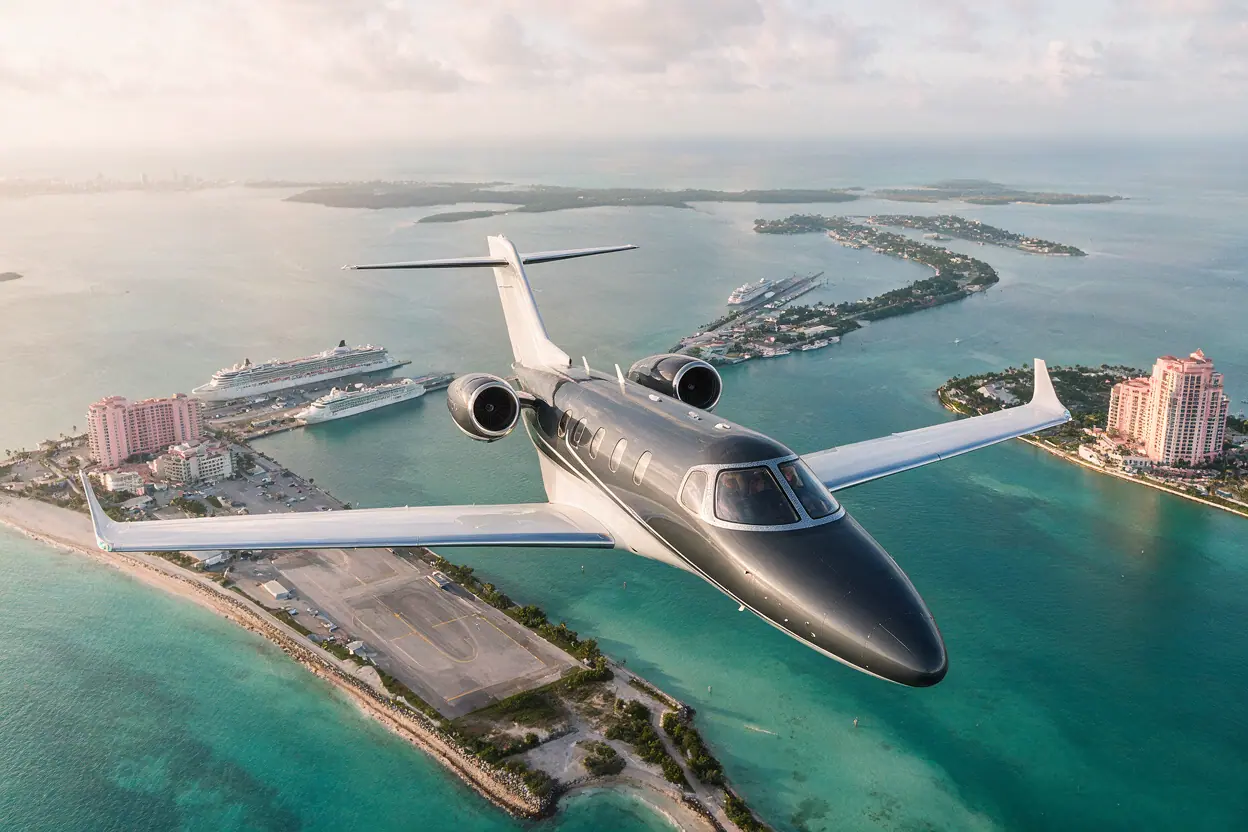
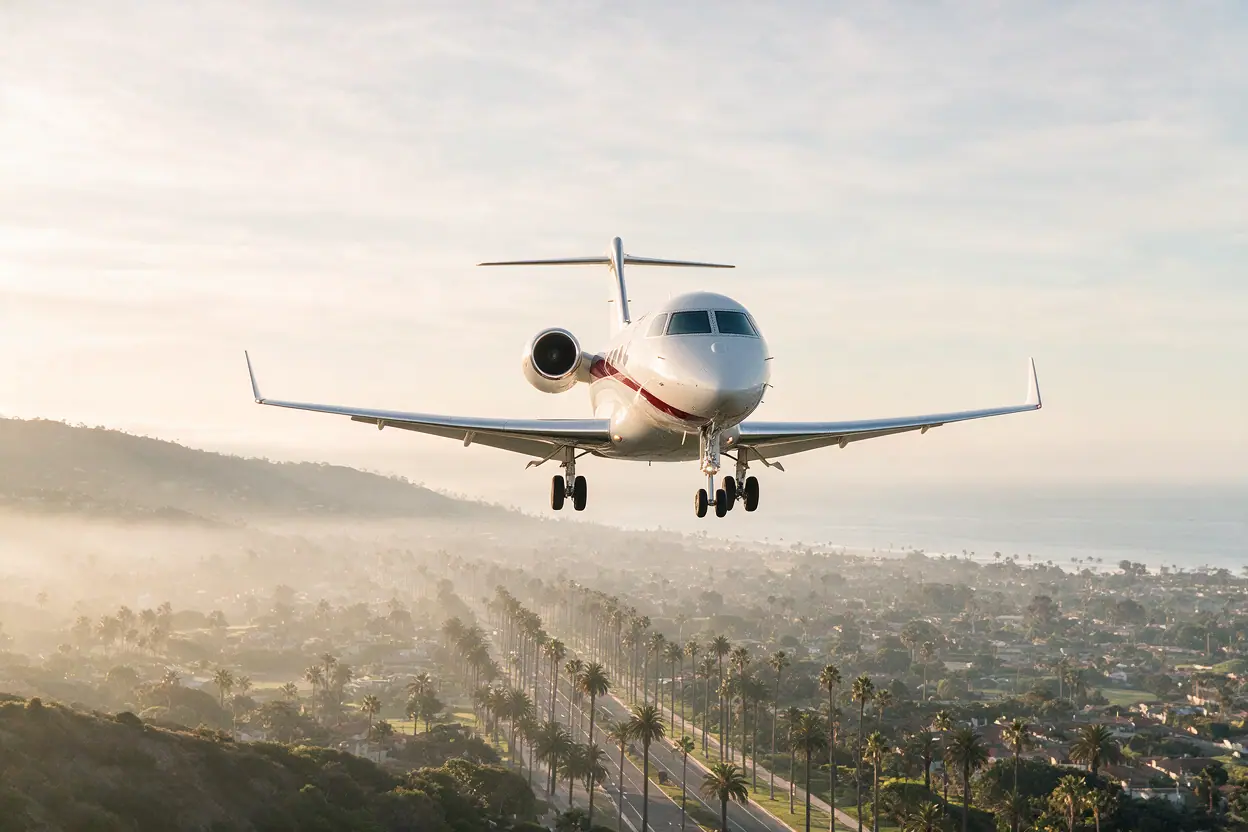
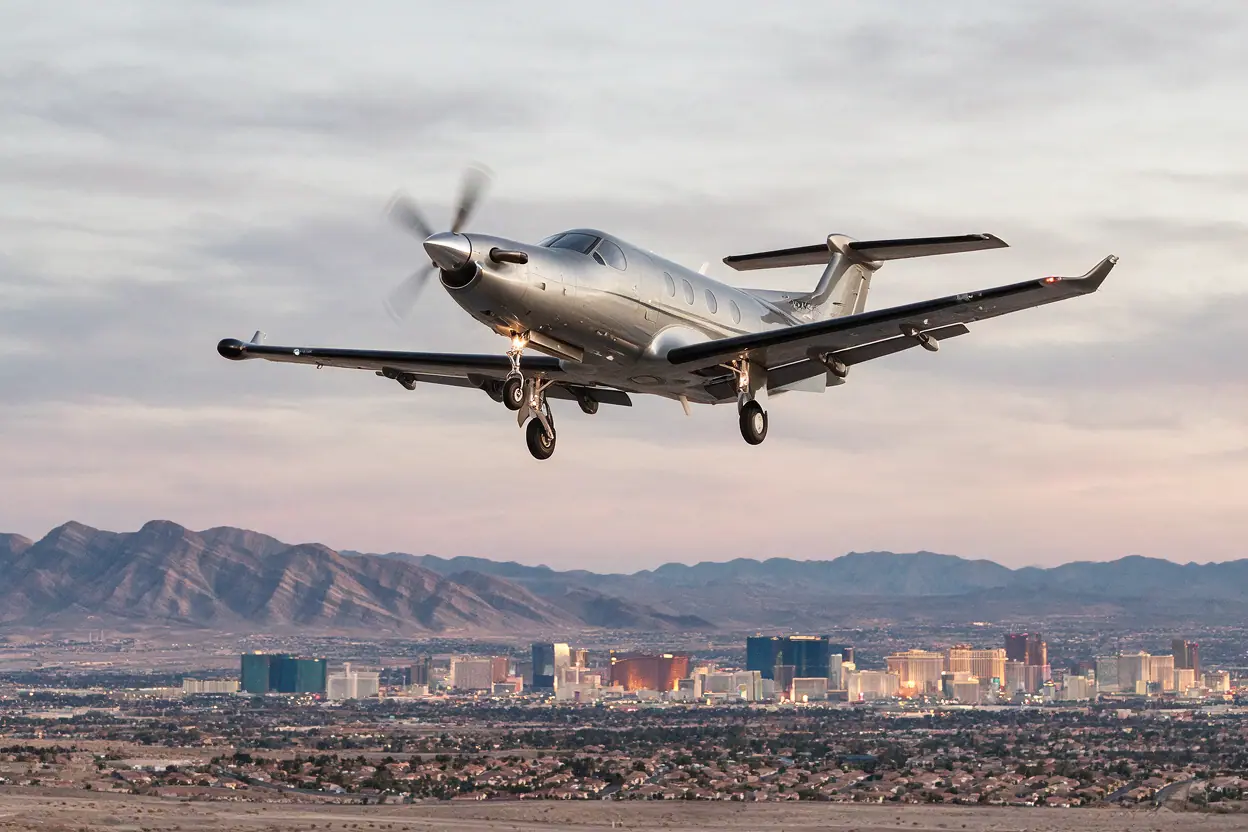
The 6 city pairs below span 199 to 2,129 nautical miles, with one-way light jet estimates running $4,000 to $36,000.

Inquiries for this field
What is the private jet price per hour Harry Reid for a light jet?
Estimates for a light jet at Harry Reid start around $2,600 per hour, though the operator sets the final figure. That range covers flying time, crew, and fuel, but airport fees and positioning can add to it. A short hop to Van Nuys at 229 miles is a different quote than a transcontinental leg. Ask for an all-in estimate and confirm what is included.
How does density altitude at LAS affect charter pricing?
July density altitude at Harry Reid reaches about 5,800 feet, and the peak 115F condition can hit 6,300 feet. That reduces performance, so a heavy jet may face a payload or fuel restriction on a hot afternoon. If the operator has to shift departure or reduce weight, then the quote can change. Winter density altitude drops to about 2,600 feet, which is easier on every aircraft.
Which FBOs serve private jets at Harry Reid?
Atlantic Aviation and Signature Aviation are the two FBOs at Harry Reid. Both handle fueling, hangar space, and passenger lounges. The operator chooses the FBO based on ramp availability and its own arrangements. If you are comparing quotes, then ask which FBO is included, because handling fees can differ and some operators pass them through separately.
How far is Harry Reid from the Las Vegas Strip?
Harry Reid International Airport is 2 miles from the Strip, which is one of the shortest transfers among major US airports. That short ground leg is a practical advantage for leisure and convention travel. If your trip is centered on the resort corridor, then the transfer is quick by taxi or courtesy car. For downtown or the convention center, the drive is still short.
What is the longest runway at Harry Reid and does it limit jets?
The longest runway at Harry Reid is 14,835 feet, which is enough for any business jet at the airport's 2,181-foot elevation. Even with a July density altitude near 5,800 feet, most jets have margin. If a long-range jet is heavy on a hot day, then the operator may still plan a fuel stop or a lighter payload. For domestic routes, runway length is rarely the limiting factor.
Who is responsible for the flight when I book through a broker?
The FAA Part 135 operator holds operational control and provides the crew, while the broker acts as an agent under DOT Part 295. That means the operator, not the broker, is responsible for the flight and its safety. If there is an international leg, then CBP handles clearance at arrival. Ask for the operator's name and certificate before you book, and confirm what the broker is arranging.